US Forces Conduct Rare Raid on Cargo Ship Carrying Military Materials from China to Iran

US forces raid China Iran cargo ship
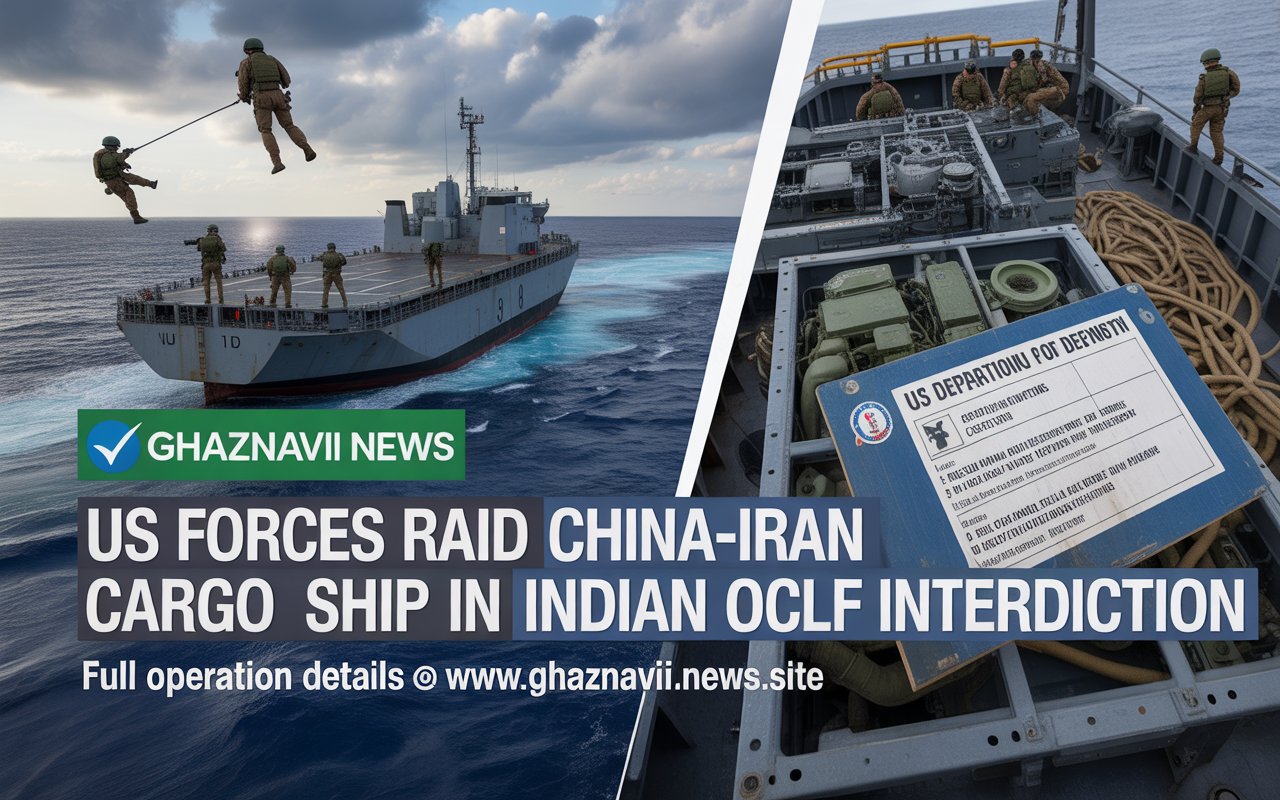
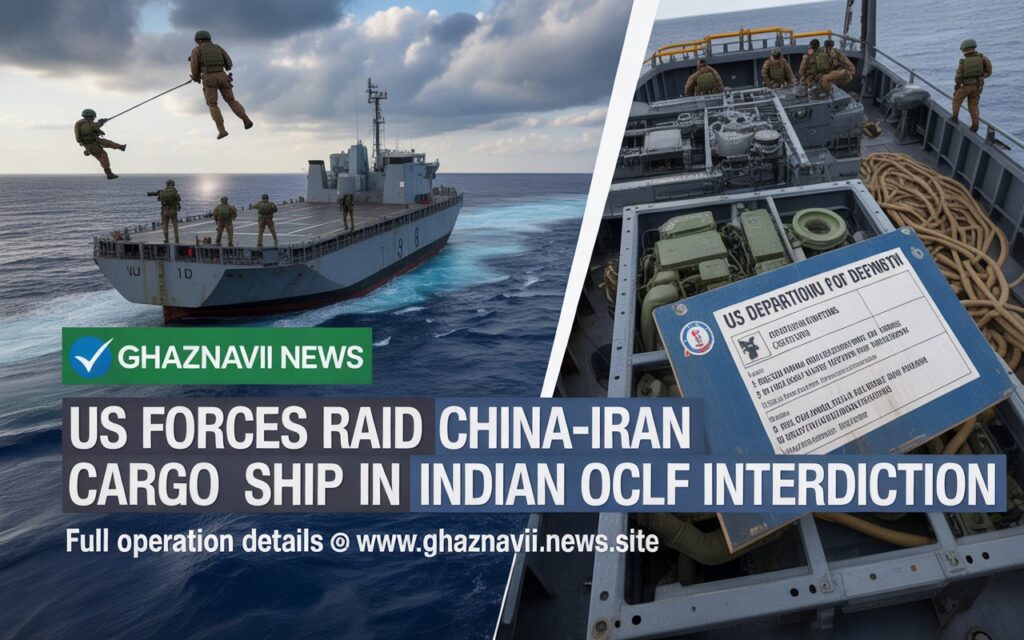
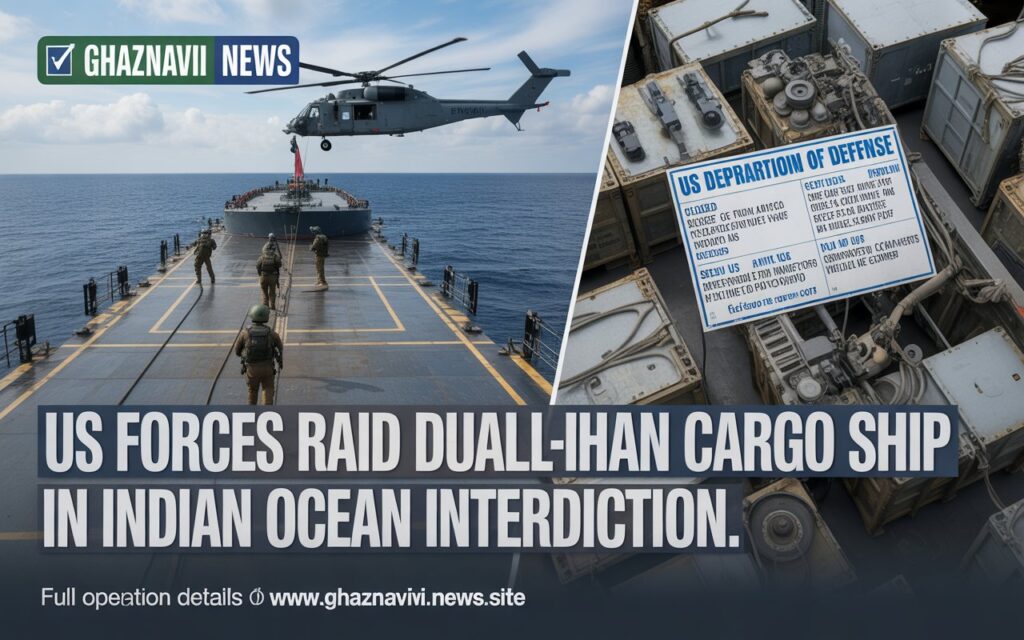
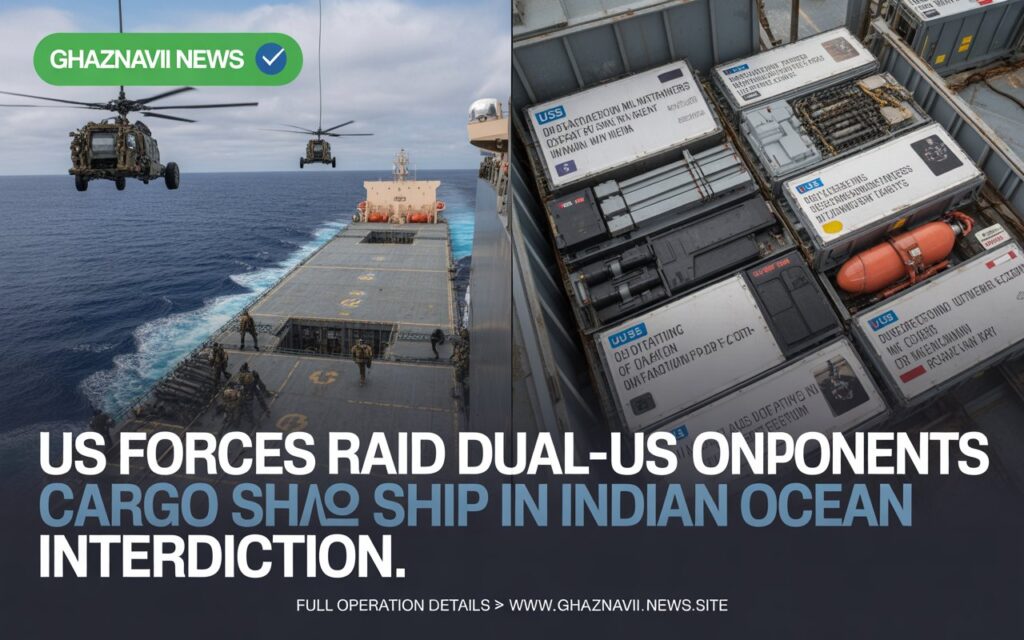
In a dramatic escalation of maritime enforcement operations, United States military forces intercepted and boarded a cargo vessel traveling from China to Iran in November 2025, seizing materials potentially useful for conventional weapons programs. The operation, conducted several hundred miles off the coast of Sri Lanka in the Indian Ocean, represents the first known US interdiction of China-origin cargo destined for Iran in several years.
According to a Wall Street Journal report published Friday December 13, 2025, citing unnamed US officials, a special operations team executed the high-seas boarding and confiscated cargo before allowing the ship to continue its journey. The vessel’s name, ownership and flag state have not been publicly disclosed, adding to the covert nature of an operation that signals the Trump administration’s increasingly aggressive approach to maritime sanctions enforcement.
The November raid occurred just weeks before another dramatic US maritime operation off Venezuela’s coast, where American forces seized the oil tanker Skipper on December 10, 2025. These back-to-back operations mark a significant shift in US naval tactics, representing enforcement actions Washington had rarely employed in recent years despite maintaining extensive sanctions regimes against Iran, Venezuela and other nations.
Details of the Indian Ocean Interdiction
US Indo-Pacific Command, the military organization responsible for operations across the vast Indo-Pacific region, declined to provide official comment on the November operation. However, officials speaking to the Wall Street Journal confirmed key details about the high-seas interdiction that provides insight into the Trump administration’s approach to countering Iran’s military procurement networks.
The boarding team consisted of US special operations forces, elite military units specifically trained for high-risk maritime interdiction missions. These operators possess specialized capabilities for boarding vessels at sea, often approaching by helicopter or fast boat before securing the ship and searching its cargo holds for contraband materials.
The interception occurred several hundred miles from Sri Lanka’s coast, placing it in international waters where the United States asserts authority under various legal frameworks including United Nations Security Council resolutions, bilateral agreements and domestic legislation authorizing action against sanctions violations.
Officials indicated the seized cargo consisted of components described as potentially useful for Iran’s conventional weapons programs. However, they noted these items qualified as dual-use materials, meaning they possess both legitimate civilian applications and potential military uses. This classification creates legal and diplomatic complexity, as such materials are not inherently illegal to transport but become problematic when destined for sanctioned entities or weapons programs.
The exact nature of the seized components remains classified, but dual-use items relevant to weapons programs could include specialized metals, electronic components, precision machining equipment, chemical precursors or technical documentation. Iran has long sought such materials through covert procurement networks designed to circumvent international sanctions and acquire technologies necessary for indigenous weapons development.
After confiscating the targeted materials, US forces allowed the cargo vessel to continue toward its destination. This decision reflects standard practice in maritime interdiction operations where the goal focuses on removing contraband rather than detaining ships or crew members who may have limited knowledge of illegal cargo hidden among legitimate goods.
Strategic Context: Disrupting Iran’s Military Procurement
The November interdiction represents part of a broader Pentagon effort to disrupt Iran’s clandestine military procurement networks following the devastating 12-Day War that occurred in June 2025. During this brief but intense conflict, the United States and Israel conducted extensive military operations against Iranian nuclear facilities, missile production sites and military command centers.
According to multiple reports, the June conflict resulted in significant damage to Iran’s nuclear infrastructure and missile capabilities. Israel and the United States reportedly destroyed key facilities, killed senior military commanders and nuclear scientists, and severely degraded Iran’s ability to develop advanced weapons systems. The conflict represented the most direct military confrontation between Iran and the US-Israel alliance in decades.
In the aftermath of June’s hostilities, Iran has sought to rebuild its damaged military capabilities by acquiring replacement components, technology and expertise from foreign sources. China has emerged as a crucial supplier, with Iranian procurement networks increasingly turning to Chinese manufacturers and intermediaries to obtain materials blocked by Western sanctions.
The US intelligence community has closely monitored these procurement efforts, tracking shipments from China to Iran and identifying cargo vessels potentially carrying military-related materials. The November interdiction demonstrates Washington’s willingness to act on this intelligence by physically intercepting shipments at sea rather than merely documenting violations or imposing additional sanctions.
This operational shift reflects frustration with the limited effectiveness of sanctions alone. While financial penalties and diplomatic pressure create significant challenges for sanctioned entities, determined actors like Iran often find workarounds through shell companies, falsified documentation and complicit intermediaries. Physical interdiction eliminates these workarounds by directly removing contraband from the supply chain.
The Growing Challenge of China-Iran Trade Relations
The interception highlights the increasingly complex challenge posed by China-Iran commercial relationships. Beijing and Tehran have developed extensive economic ties over the past two decades, with China becoming Iran’s largest trading partner and a crucial source of investment, technology and diplomatic support.
China has consistently opposed US sanctions on Iran, arguing they lack United Nations Security Council authorization and represent illegal unilateral measures that violate international trade rules. Beijing views these sanctions as part of broader American efforts to contain both Iran and China, making resistance to US pressure a matter of strategic interest rather than merely supporting an Iranian partner.
This political dynamic creates practical challenges for US interdiction efforts. While the November operation successfully seized contraband, it inevitably strains US-China relations by targeting Chinese-origin cargo and potentially involving Chinese shipping interests. Beijing views such actions as provocative interference with legitimate trade, regardless of whether the specific shipment violated international obligations.
The Chinese Foreign Ministry has previously condemned similar US maritime actions. On Friday December 13, spokesman Guo Jiakun criticized the seizure of the Venezuelan oil tanker, stating Beijing opposes unilateral illicit sanctions and long-arm jurisdiction lacking basis in international law or United Nations authorization. These same arguments apply to interdiction of China-Iran cargo, setting up potential diplomatic confrontations as Washington expands maritime enforcement operations.
Neither Iran nor China immediately commented on reports of the November interdiction, though both nations have established patterns of condemning US maritime operations. Tehran typically characterizes such actions as piracy and violations of international law, while Beijing frames them as illegal unilateral coercion. The silence following the November operation may reflect uncertainty about how to respond to an incident conducted covertly several weeks earlier.
Comparing Recent Maritime Enforcement Operations
The China-Iran cargo interdiction must be understood within the context of the Trump administration’s broader pattern of aggressive maritime enforcement operations targeting sanctioned nations and their trading partners. The December 10 seizure of the Venezuelan oil tanker Skipper provides particularly relevant comparison.
The Skipper operation involved US Coast Guard personnel, supported by Navy forces and federal law enforcement agencies, boarding a large oil tanker in international waters off Venezuela. The vessel was transporting Venezuelan crude oil, with approximately half the cargo belonging to a Cuban state-run importer. US authorities had tracked the ship for weeks as it employed deception tactics including falsifying its automatic identification system to conceal its true location.
Using Coast Guard Maritime Security Response Teams, elite forces specializing in high-risk boarding operations, American personnel fast-roped from helicopters onto the Skipper’s deck and took control of the vessel. The ship was subsequently escorted to Galveston, Texas, where US authorities plan to seize the oil cargo following legal proceedings while releasing the crew members.
Both operations share key characteristics including targeting international shipping in international waters, employing special operations or elite forces for the boarding action, acting on intelligence gathered through surveillance and tracking, seizing specific materials while releasing vessels and crews, and representing enforcement actions the United States had rarely undertaken in recent years despite maintaining relevant authorities.
The similarities suggest these operations reflect a deliberate strategic decision to employ maritime interdiction more aggressively rather than isolated incidents responding to unique circumstances. This interpretation aligns with statements from Trump administration officials emphasizing their commitment to maximum pressure campaigns against adversaries.
Legal and Operational Frameworks for Maritime Interdiction
Understanding the legal basis for operations like the November China-Iran cargo interdiction requires examining multiple overlapping authorities that the United States invokes to justify high-seas enforcement actions. These authorities derive from international law, United Nations Security Council resolutions, bilateral agreements and domestic legislation.
The United Nations Convention on the Law of the Sea establishes baseline rules for maritime operations, including provisions allowing states to interdict vessels engaged in activities like weapons proliferation, narcotics trafficking or supporting terrorism. However, these authorities generally require either flag state consent, UN Security Council authorization or specific treaty obligations.
United Nations Security Council resolutions have imposed arms embargoes and related restrictions on Iran, though comprehensive sanctions were lifted under the 2015 nuclear deal before being partially reimposed. The US argues continuing obligations under these resolutions justify interdicting weapons-related materials, though other Security Council members dispute this interpretation following the nuclear agreement.
The US also invokes domestic legislation including the Iran Sanctions Act, the Countering America’s Adversaries Through Sanctions Act and various executive orders imposing comprehensive sanctions on Iranian entities and activities. These laws authorize US authorities to act against violations even when foreign vessels and actors are involved, though such extraterritorial application generates significant international controversy.
Additionally, the United States maintains bilateral agreements with numerous nations authorizing boarding and inspection of vessels flagged in their jurisdictions. These ship boarding agreements create legal mechanisms for interdiction operations, though their specific terms vary and may not cover all circumstances like the November operation.
The complex interplay of these authorities means that while the US asserts legal justification for operations like the November interdiction, other nations and international law experts often dispute whether such actions comply with international legal standards. This legal ambiguity creates ongoing tensions in maritime enforcement efforts.
Iran Under Mounting Pressure
The November cargo interdiction adds to mounting pressure on Iran as the Islamic Republic attempts to rebuild capabilities damaged during June’s 12-Day War while navigating severe economic sanctions and diplomatic isolation. Tehran faces challenges on multiple fronts that complicate efforts to resume normal military procurement and economic activity.
Iran remains under some of the most comprehensive sanctions ever imposed on a major nation. The Trump administration has implemented maximum pressure policies targeting Iranian oil exports, banking sectors, shipping networks and military-industrial facilities. These sanctions block access to international financial systems, prevent legitimate trade and force Iran to rely on elaborate evasion schemes involving front companies, sanctions-busting vessels and covert procurement networks.
The physical damage from June’s military strikes compounded economic sanctions. Satellite imagery and intelligence reports indicate extensive destruction of key facilities including uranium enrichment centrifuges at Natanz and Fordow, missile production complexes, air defense installations and research laboratories. Rebuilding this infrastructure requires importing specialized equipment, components and materials that sanctions specifically target.
Additionally, Iran faces significant domestic political and economic challenges. The combination of sanctions, corruption, mismanagement and regional conflicts has devastated the Iranian economy. Inflation remains extremely high, unemployment affects large portions of the population, and the currency has lost substantial value. These conditions create internal pressures that limit resources available for military programs even as external threats demand enhanced defensive capabilities.
The interdiction of China-bound cargo represents another obstacle in Iran’s efforts to overcome these challenges by exploiting whatever trade relationships remain available. Each successful interdiction removes needed materials, signals the risks suppliers face when dealing with Iranian networks, and demonstrates Washington’s capability and willingness to disrupt procurement efforts anywhere in the world.
China’s Dilemma in Supporting Sanctioned Partners
The November interdiction also highlights the difficult position China faces in balancing commercial relationships with sanctioned nations against risks of antagonizing the United States through sanctions evasion support. Beijing opposes US sanctions as a matter of principle and strategic interest, but Chinese companies and shipping interests face genuine risks when facilitating trade that violates American restrictions.
China has developed extensive trade relationships with Iran, Venezuela, Russia and other nations under US sanctions. These relationships serve multiple purposes including access to energy resources, political solidarity with nations challenging American hegemony, and demonstrations of Chinese willingness to provide alternative economic partnerships for countries excluded from Western-led systems.
However, Chinese entities facilitating sanctions evasion face potential consequences including seizure of cargo and vessels, financial penalties blocking access to dollar-based transactions, designation under US sanctions programs, and reputational damage affecting broader business relationships. The November interdiction demonstrates these are not merely theoretical risks but real consequences that even indirect involvement can trigger.
This creates pressure on Chinese companies to carefully assess risks versus rewards when engaging in potentially sanctions-violating trade. While Beijing publicly rejects US sanctions as illegitimate, Chinese businesses must consider practical realities when American forces physically interdict cargo vessels and confiscate materials.
The situation becomes more complex as the Trump administration signals willingness to employ maritime interdiction more frequently. If boarding operations become routine rather than exceptional, Chinese shipping interests may recalculate their willingness to transport dual-use materials to sanctioned destinations, even absent formal compliance with American restrictions they consider illegitimate.
Regional Security Implications
The November interdiction and broader pattern of aggressive US maritime operations carry significant implications for regional security dynamics in the Indo-Pacific, Middle East and beyond. These operations signal American willingness to employ military force in support of sanctions enforcement, changing calculations for nations and companies considering engagement with sanctioned entities.
In the Indo-Pacific region, the operation demonstrates US military presence and capability throughout the vast maritime domain from the Indian Ocean through the western Pacific. The interception occurred hundreds of miles from shore in one of the world’s busiest shipping lanes, showing American forces can project power and conduct operations far from home bases.
This capability matters because it directly supports broader US strategic competition with China for influence throughout the Indo-Pacific. Beijing has invested heavily in naval expansion and maritime infrastructure including ports, shipping lines and surveillance systems. American demonstrations of maritime enforcement capability counter narratives of inevitable Chinese regional dominance by showing Washington retains ability to control critical sea lanes.
In the Middle East, successful interdiction of Iran-bound cargo reinforces messages that Tehran remains isolated and vulnerable despite surviving the June conflict. Each interdiction reduces confidence that Iran can reliably acquire needed materials, potentially encouraging more cautious behavior or forcing more expensive workarounds through increasingly elaborate procurement schemes.
Globally, the operations signal to potential sanctions violators that US enforcement extends beyond financial penalties to include physical interdiction of contraband. This raises stakes considerably because losing an entire cargo represents direct financial loss plus reputational damage plus increased scrutiny of future operations. These heightened risks may deter marginal actors from engaging in sanctions evasion even if dedicated networks continue operating.
The Venezuela Connection and Pattern Recognition
Understanding the November China-Iran cargo interdiction requires recognizing its connection to the December Venezuela oil tanker seizure and the broader pattern of Trump administration maritime enforcement operations. These incidents are not isolated events but components of a deliberate strategy to employ naval power more aggressively in support of foreign policy objectives.
The Skipper seizure off Venezuela occurred just weeks after the November Iran-bound cargo interdiction, suggesting coordinated planning and execution across different geographic theaters and targeting different sanctions regimes. Both operations involved special forces or elite Coast Guard units, both seized specific materials while releasing vessels and crews, and both represented enforcement actions rarely conducted in recent years.
Additional context includes ongoing US military strikes against suspected drug-smuggling vessels in the Caribbean and Pacific Ocean. Since early September 2025, American forces have struck more than 20 boats, killing over 80 people in operations the administration characterizes as counternarcotics enforcement. These strikes have generated significant controversy, with critics questioning legal authorities, rules of engagement and civilian casualties.
Taken together, these operations reveal a Trump administration willing to employ military force in support of sanctions enforcement, counternarcotics operations and pressure campaigns against adversaries. This represents a significant escalation from previous practice where maritime interdiction occurred more rarely and with greater deference to diplomatic sensitivities.
Looking Forward: Implications and Potential Escalation
The November interdiction and December tanker seizure suggest the Trump administration’s aggressive maritime enforcement operations will continue and potentially expand in scope and frequency. This trajectory carries important implications for international relations, maritime security and the effectiveness of sanctions regimes.
Future operations may target additional China-Iran cargo shipments, Venezuela-bound vessels, ships carrying materials to Russia or North Korea, or other sanctions-violating trade. Each successful interdiction reinforces the operational template and political commitment to this approach, making subsequent operations more likely.
However, expanded maritime enforcement also risks escalation and unintended consequences. Interdicting vessels creates potential for confrontation with naval forces from China, Iran, Russia or other nations opposing US actions. While the November and December operations proceeded without incident, future attempts could encounter armed resistance, generating crisis situations with unpredictable outcomes.

International law disputes surrounding maritime interdiction operations may intensify as the United States conducts more frequent operations. Nations affected by interdictions or opposed to American sanctions will increasingly challenge legal justifications, potentially bringing cases before international tribunals or organizing diplomatic opposition through multilateral forums.
The effectiveness of maritime interdiction as sanctions enforcement mechanism remains uncertain. While successful operations remove specific contraband shipments, they cannot prevent all violations given the vast scale of global maritime commerce. Determined actors can adapt by using different routes, more sophisticated deception, or accepting higher losses as cost of doing business.
Conclusion: A New Era of Maritime Enforcement
The November 2025 US forces raid on a cargo ship carrying materials from China to Iran marks a potentially significant turning point in how the United States employs naval power to enforce sanctions and pressure adversaries. Combined with the December Venezuelan oil tanker seizure and ongoing Caribbean interdiction operations, these incidents reveal an administration willing to push boundaries of traditional maritime enforcement practice.
For Iran, the operation represents another obstacle in efforts to rebuild military capabilities damaged during June’s devastating conflict with the United States and Israel. Each successful interdiction removes needed materials, signals risks to potential suppliers, and demonstrates continuing American capability to disrupt Tehran’s procurement networks anywhere in the world.
For China, the interdiction creates uncomfortable dilemmas about balancing opposition to US sanctions against practical risks that Chinese companies and shipping interests face when facilitating potentially violating trade. Beijing may condemn American maritime operations as illegal, but Chinese entities must consider real consequences when US forces physically interdict cargo vessels.
For the broader international community, these operations raise fundamental questions about legal authorities for maritime interdiction, appropriate uses of naval force in peacetime, and effectiveness of sanctions enforcement through military means. These questions will become increasingly urgent as the Trump administration signals intentions to continue and expand aggressive maritime operations.
The November operation off Sri Lanka’s coast may have occurred hundreds of miles from any shore, conducted quietly without immediate public disclosure. But its implications ripple across oceans and continents, potentially reshaping maritime security practices and great power competition for years to come. Whether this new era of maritime enforcement achieves its objectives or generates unintended consequences that undermine broader interests remains to be seen.
What did US forces seize during the November raid on the China to Iran cargo ship?
US forces seized dual-use materials potentially useful for Iran’s conventional weapons programs during the November 2025 Indian Ocean interdiction. Officials described the confiscated items as components that could serve both civilian and military applications, though the exact nature of the materials remains classified. Dual-use items relevant to weapons programs typically include specialized metals, electronic components, precision machining equipment, chemical precursors or technical documentation. US special operations forces boarded the vessel several hundred miles off Sri Lanka’s coast, confiscated the targeted cargo, then allowed the ship to continue its journey.
Why did the US intercept a cargo ship traveling from China to Iran?
The interception was part of Pentagon efforts to disrupt Iran’s clandestine military procurement networks following the 12-Day War in June 2025, during which the United States and Israel inflicted severe damage on Iranian nuclear facilities, missile production sites and military infrastructure. Iran has sought to rebuild damaged capabilities by acquiring replacement components and technology from foreign sources, particularly China. The November operation represents the first known US interdiction of China-origin cargo destined for Iran in several years, signaling the Trump administration’s increasingly aggressive maritime enforcement tactics.
Where exactly did the US forces board the China-Iran cargo ship?
The boarding operation occurred several hundred miles off the coast of Sri Lanka in the Indian Ocean during November 2025. This location placed the interdiction in international waters where the United States asserts authority under various legal frameworks including UN Security Council resolutions, bilateral agreements and domestic sanctions legislation. US Indo-Pacific Command, responsible for military operations across the vast Indo-Pacific region, carried out the operation but declined to provide official comment. The vessel’s name, ownership and flag state have not been publicly disclosed.
How does the China-Iran cargo raid connect to the Venezuela oil tanker seizure?
Both operations represent components of the Trump administration’s pattern of aggressive maritime enforcement. The November China-Iran cargo interdiction occurred just weeks before US forces seized the Venezuelan oil tanker Skipper on December 10, 2025 off Venezuela’s coast. Both incidents involved elite military or Coast Guard forces boarding vessels in international waters, seizing specific materials while releasing ships and crews, and executing enforcement actions that Washington had rarely undertaken in recent years. These back-to-back operations signal a deliberate strategic decision to employ maritime interdiction more aggressively.
Table of Contents
Read More News