
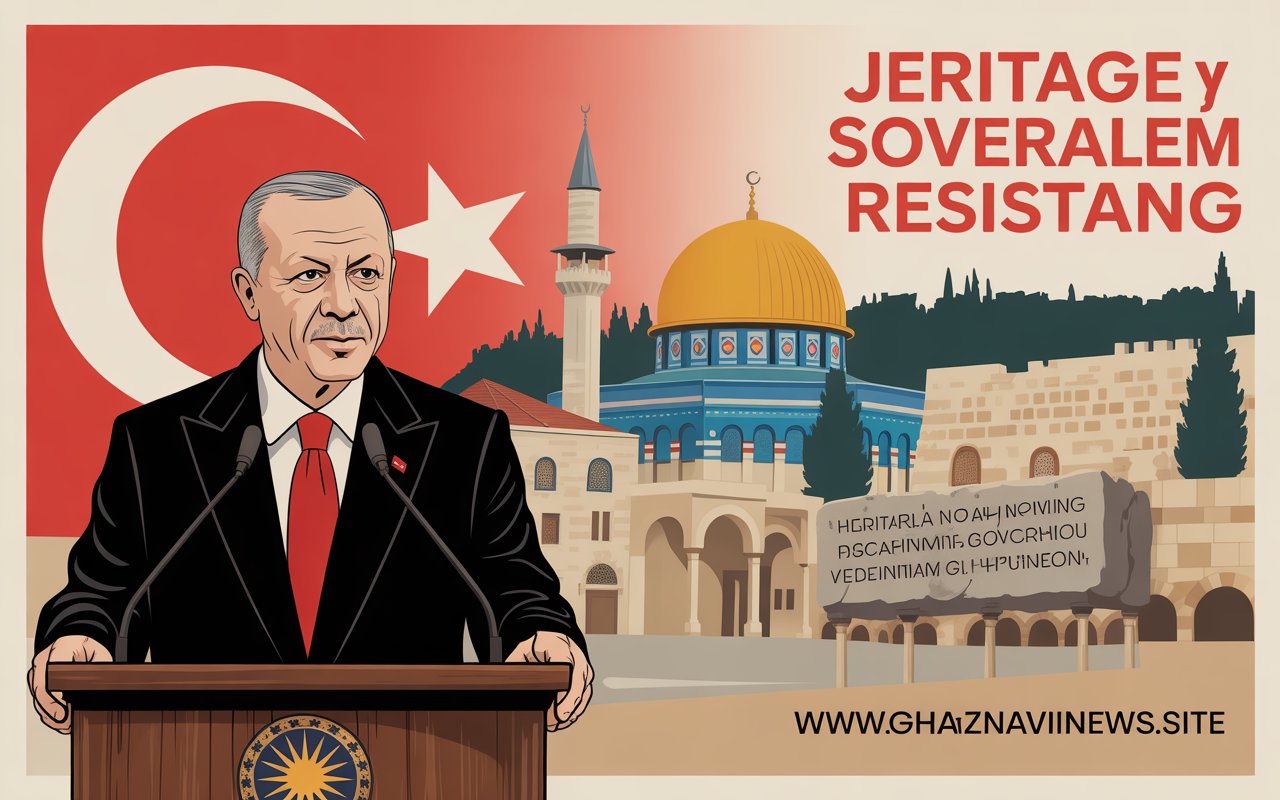
Turkiye Jerusalem stance: Erdogan Rejects Netanyahu’s Claims over Siloam Inscription

Turkiye Jerusalem stance
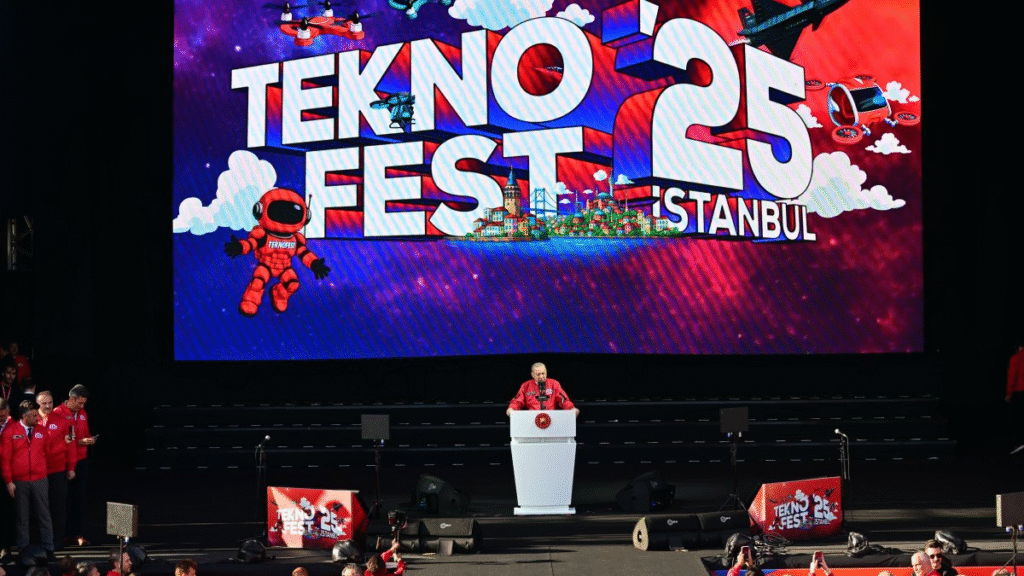
Turkiye President Recep Tayyip Erdogan has once again placed himself at the forefront of the Palestinian cause, issuing a strong rebuke to Israeli Prime Minister Benjamin Netanyahu’s recent comments on the historic Siloam Inscription. Speaking at Teknofest 2025 in Istanbul, Erdogan declared that Turkey would not give Israel “even a single stone” belonging to Jerusalem, reinforcing his stance that the holy city’s heritage is non-negotiable.
The dispute revolves around the ancient Siloam Inscription, a 2,700-year-old artifact preserved in Istanbul since the Ottoman era. Israel has long sought its return, but Ankara has repeatedly rejected such requests, viewing them not just as archaeological matters but as questions of sovereignty, history, and justice.
Erdogan’s defiant words at Teknofest
In his speech, Erdogan criticized Netanyahu’s persistence, saying:
“And now, shamelessly, they are still chasing after inscriptions. We will not give you that inscription—nor even a single stone belonging to Al-Quds al-Sharif (Jerusalem).”
He emphasized Turkey’s deep-rooted historical connection to Jerusalem, declaring, “We are the heirs of Sultan Abdul Hamid, walking the same path. We will never renounce our claim on Jerusalem.” Erdogan also praised the resilience of Palestinians in Gaza, saluting their determination to defend their land despite ongoing Israeli attacks.
This rhetoric underscores Erdogan’s long-standing policy of aligning Turkey with the Palestinian struggle and rejecting any Israeli claim to Jerusalem’s sacred heritage.
Netanyahu’s counterclaim
Erdogan’s remarks came in direct response to Netanyahu’s statement during a ceremony marking the reopening of the ancient path connecting the Pool of Siloam to Al-Aqsa Mosque. Netanyahu alleged that in 1998, he personally requested the Siloam Inscription from then-Turkish Prime Minister Mesut Yilmaz. According to Netanyahu, Yilmaz refused due to domestic political concerns, particularly because Istanbul’s mayor at the time was Erdogan.
Netanyahu insisted:
“Jerusalem is our city. Mr. Erdogan, it is not your city, it is ours. It has always been our city. It will never be divided again.”
His claim reignited the longstanding diplomatic and cultural dispute between Turkey and Israel, further fueling the already tense rhetoric between the two leaders.
Erdogan’s unwavering rejection
Erdogan, one of Israel’s harshest critics since the Gaza war escalated, doubled down on his stance. He vowed that Turkey would never allow “unauthorized hands to desecrate Jerusalem.”
For Erdogan, the issue is not just about a historic artifact but about broader principles of sovereignty, resistance, and justice. He linked the matter to the larger struggle for Palestinian statehood, declaring that Turkey’s efforts would continue until an independent Palestinian state with East Jerusalem as its capital is established within the 1967 borders.
He further stated:
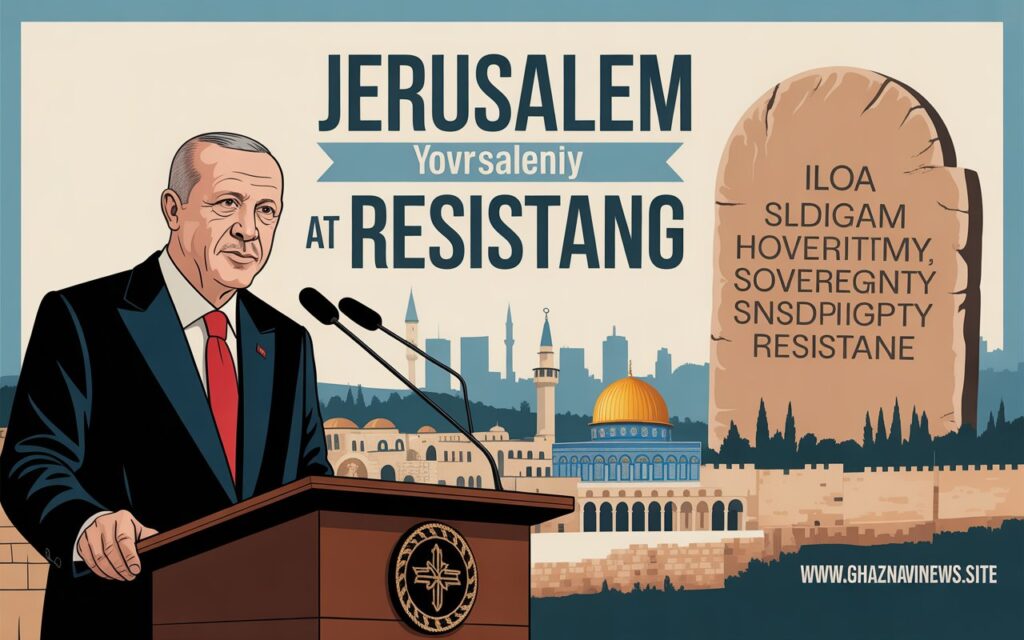
“Defending Jerusalem is defending humanity’s shared values. Defending Jerusalem is defending peace and humanity itself.”
The symbolism of Jerusalem
Erdogan’s position highlights the symbolic and spiritual significance of Jerusalem for Muslims worldwide. His framing of the issue elevates it beyond politics, portraying it as a moral and civilizational responsibility. By invoking Sultan Abdul Hamid, who resisted Zionist attempts to buy land in Palestine during the late Ottoman period, Erdogan draws a direct line between Turkey’s Ottoman past and its present role as a guardian of Jerusalem.
Global reaction and implications
The renewed war of words between Erdogan and Netanyahu comes at a time of heightened tensions in the Middle East. With Israel’s ongoing military operations in Gaza drawing widespread international criticism, Erdogan’s fiery remarks resonate deeply with pro-Palestinian audiences.
Turkey’s stance could further strain Ankara-Tel Aviv relations, which have already been marked by decades of ups and downs, oscillating between cautious cooperation and harsh confrontation. The Jerusalem question once again proves to be a defining issue in shaping Turkey-Israel relations.
What is the Siloam Inscription and why is it important?
The Siloam Inscription is a 2,700-year-old artifact linked to the ancient city of Jerusalem, currently preserved in Istanbul since the Ottoman period.
Why does Israel want the Siloam Inscription?
Israel considers it part of Jewish history and has repeatedly requested its return, but Turkey has consistently refused.
What is Erdogan’s position on Jerusalem?
Erdogan insists that Jerusalem’s heritage is non-negotiable, vowing never to surrender even a single stone of Al-Quds al-Sharif to Israel.
How does this affect Turkey-Israel relations?
The dispute deepens tensions, especially as Erdogan compares Netanyahu to historical tyrants and denounces Israel’s actions in Gaza.
What larger issue does Erdogan connect to this artifact?
Erdogan links it to the Palestinian cause, asserting that Turkey’s struggle will continue until a free Palestinian state with East Jerusalem as its capital is established.
Table of Contents
Read More Turkiye Jerusalem stance

Turkiye Jerusalem stance