
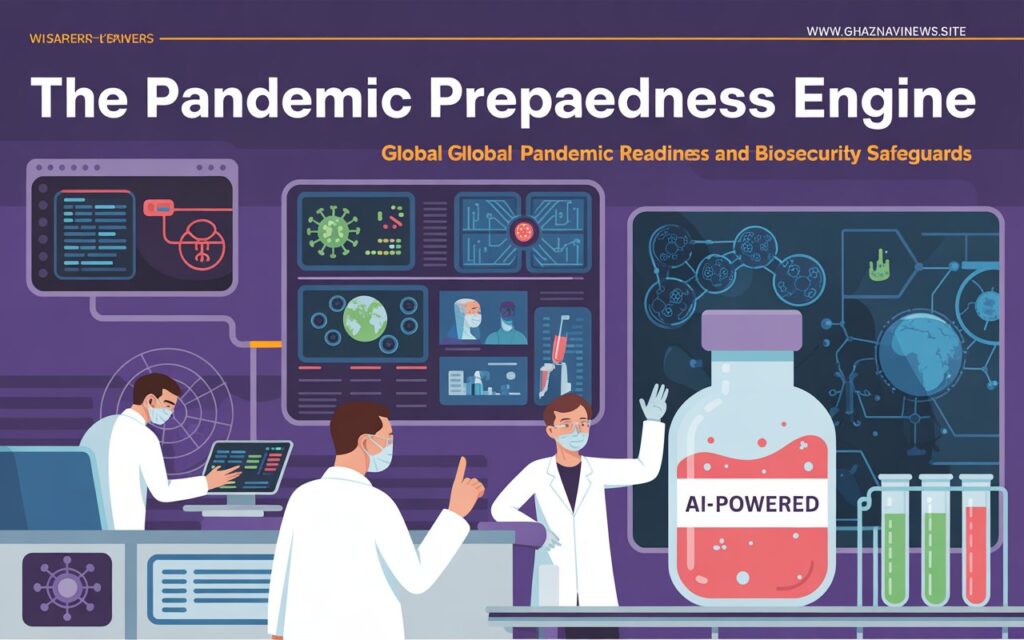
Pandemic Preparedness Engine: CEPI’s AI-Powered Revolution in Vaccine Development and Biosecurity

Artificial intelligence (AI) is no longer just transforming industries like finance and technology—it is reshaping how humanity prepares for and fights pandemics. At the center of this transformation is CEPI’s groundbreaking Pandemic Preparedness Engine, an AI-driven platform designed to accelerate vaccine discovery, enhance pandemic readiness, and strengthen biosecurity safeguards worldwide.
AI in vaccine development: From SKYCovione™ to next-generation platforms
The journey toward the Pandemic Preparedness Engine began in June 2022, when South Korea–based SK Bioscience secured approval for its COVID-19 vaccine, SKYCovione™. Developed in partnership with the University of Washington’s Institute for Protein Design and funded by CEPI, SKYCovione™ was revolutionary because it became the first ever computationally designed medical product approved for use anywhere in the world. In simpler terms, it was the first licensed vaccine created using artificial intelligence.
This milestone highlighted how generative AI and protein design systems could reshape structural biology. Tools like Google DeepMind’s AlphaFold, which predicts 3D protein structures from amino acid sequences, have already revolutionized drug discovery and even won part of the Nobel Prize in Chemistry in 2024. The Pandemic Preparedness Engine builds upon this scientific foundation, with the goal of ensuring that humanity can develop vaccines against emerging viral threats in as little as 100 days.
CEPI’s vision: A virtual scientific partner
According to Dr. Andrew Hebbler, CEPI’s Director of Biosecurity, the Pandemic Preparedness Engine will act as a “ChatGPT for vaccinologists”—a virtual scientific partner capable of analyzing massive datasets, generating hypotheses, identifying vaccine targets, and accelerating design processes with unprecedented speed.
The engine integrates pandemic surveillance data, structural biology insights, and clinical research knowledge. It will support every stage of vaccine development, from early detection of viral threats and pre-clinical modeling to clinical trial design and safety assessments. By harnessing AI’s predictive power, CEPI aims to drastically cut down the time required to move from identifying a viral threat to producing an effective vaccine.
Addressing dual-use risks: Biosecurity at the core
While the Pandemic Preparedness Engine offers unprecedented opportunities, CEPI acknowledges the biosecurity risks associated with advanced AI. The same algorithms that can design life-saving vaccines could theoretically be misused to engineer harmful pathogens. To counter these threats, CEPI has embedded biosecurity-by-design principles into the program from the start.
Strong safeguards will regulate who can access the engine, how its capabilities are used, and what levels of biosecurity clearance are required. Multi-layered data protections will ensure responsible usage, balancing openness and equitable access with the need to prevent exploitation by malicious actors.
Partnership with Sentinel Bio for ethical governance
To further strengthen security, CEPI has partnered with U.S.-based nonprofit Sentinel Bio. Together, they are creating a governance framework that defines “rules of the road” for the responsible use of the Pandemic Preparedness Engine. Importantly, this work is being carried out before the engine becomes operational, ensuring that risk mitigation strategies are embedded early in the platform’s development.
Sentinel Bio’s CEO, Claire Qureshi, emphasized that this collaboration aims to maximize the benefits of AI in public health while minimizing its risks. The partnership is also exploring potential misuse scenarios to ensure proactive safeguards are in place.
Global implications for pandemic preparedness
The launch of the Pandemic Preparedness Engine could mark a turning point in how the world prepares for infectious disease threats. By integrating AI, vaccine science, and biosecurity principles, CEPI envisions a future where societies are not caught off guard by outbreaks but are instead equipped to respond within weeks.

If successful, the platform could serve as a global model for responsible AI in biotechnology, accelerating not only vaccine development but also shaping ethical standards for AI-driven biological design. Ultimately, CEPI’s initiative represents a bold step toward a safer, pandemic-resilient world.
Why is the Pandemic Preparedness Engine significant?
Why is the Pandemic Preparedness Engine significant?
It represents the world’s first AI platform dedicated to pandemic readiness, aiming to produce vaccines within 100 days of identifying new viral threats.
What is the Pandemic Preparedness Engine?
The Pandemic Preparedness Engine is an AI-powered platform developed by CEPI to accelerate vaccine design, improve pandemic response, and strengthen biosecurity.
How does AI help in vaccine development?
AI can predict protein structures, identify vaccine targets, design clinical trials, and simulate safety outcomes, significantly reducing development timelines.
Who is Sentinel Bio and what role do they play?
Sentinel Bio is a U.S.-based nonprofit partnering with CEPI to design governance and security frameworks that prevent misuse of the engine.
What are the biosecurity risks of AI in vaccine design?
While AI can save lives, it could also be misused to design harmful pathogens. CEPI addresses this with strict security protocols and multi-layered safeguards.
Table of Contents
Read More News











[…] More Turkiye Jerusalem […]