Pakistan Saudi Arabia Strategic Defense Pact: Regional Implications, Nuclear Concerns, and U.S. Diplomacy

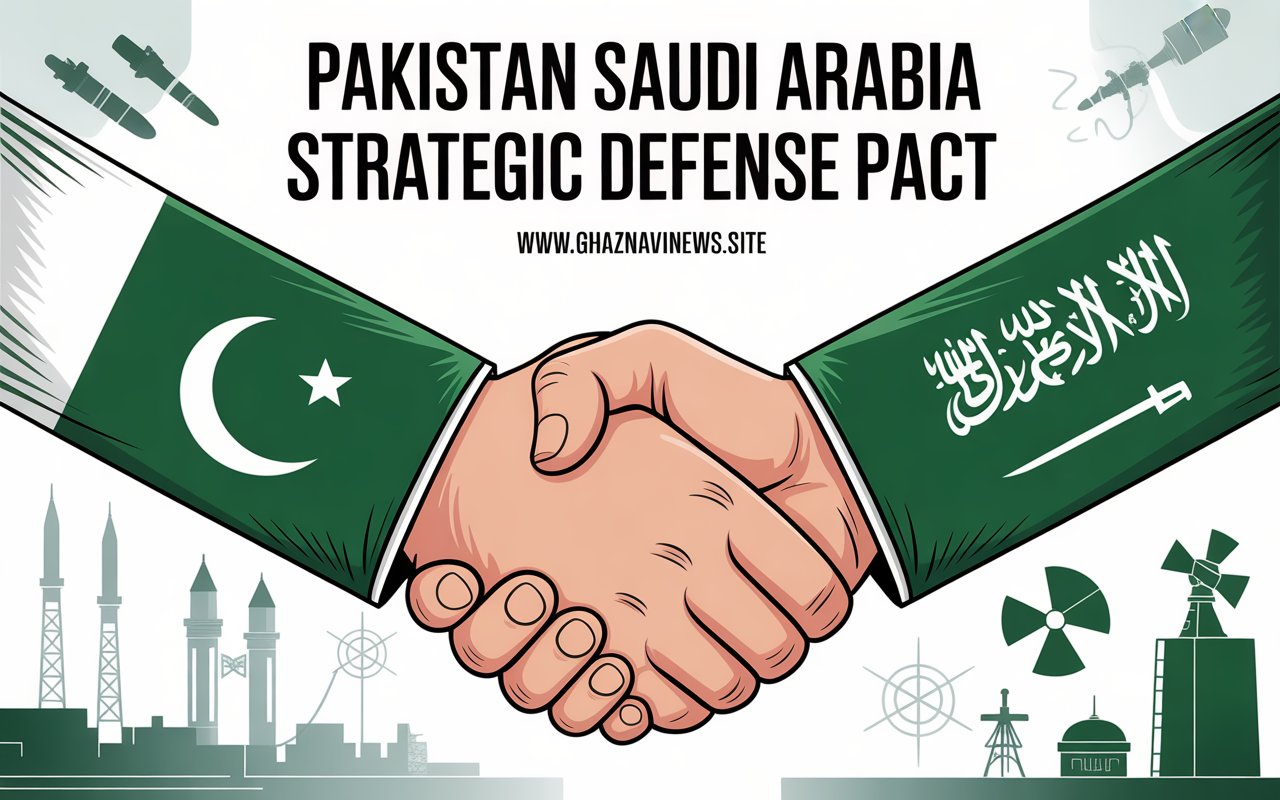
The newly signed Pakistan Saudi Arabia strategic defense pact is making waves across South Asia and the Middle East. On the surface, the agreement appears largely symbolic, yet its implications extend far beyond mere diplomacy. Signed on September 17 during Pakistani Prime Minister Shehbaz Sharif’s official visit to Riyadh, the pact declares that aggression against either nation will be treated as aggression against both.
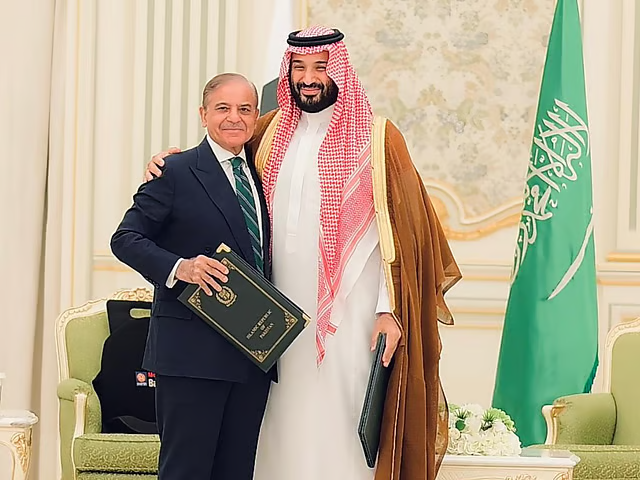
Photo Credit Gulf News
This commitment raises questions about nuclear deterrence, shifting alliances, and the potential rebalancing of U.S. influence in the region. At a time when Saudi Arabia is reasserting its defense ambitions and Pakistan remains a nuclear-armed state with regional security challenges, the agreement introduces complex dynamics that could shape the future of Middle Eastern and South Asian geopolitics.
Background of the Agreement
Prime Minister Sharif signed the defense pact alongside Saudi Crown Prince Mohammed bin Salman, marking a formal pledge of mutual defense. The agreement did not emerge overnight; it follows years of close security cooperation between the two nations.
- In November 2024, Pakistan’s Chief of Army Staff General Asim Munir visited Riyadh to discuss strengthening defense cooperation.
- In June 2025, he accompanied Prime Minister Sharif on another visit, signaling that talks were advancing.
- The September 2025 signing marks the culmination of these high-level engagements.
Diplomatically, the pact is also a subtle signal to Washington. Saudi Arabia’s growing frustration with U.S. regional policy — particularly following Israeli strikes on Hamas leaders in Qatar — has accelerated Riyadh’s pursuit of alternative security guarantees.
Nuclear Dimensions of the Pact
One of the most debated aspects of the Pakistan Saudi Arabia strategic defense pact is whether it grants Riyadh access to Pakistan’s nuclear umbrella.
- Since 1998, Pakistan has developed an estimated 170 nuclear warheads, deliverable through ballistic missiles, aircraft, and cruise missiles.
- When asked directly about nuclear guarantees, a senior Saudi official told Reuters: “It is a comprehensive defense agreement involving all military capabilities.”
While no official confirmation exists, analysts argue that the pact provides Saudi Arabia with a form of strategic reassurance against Iran’s nuclear ambitions.
Saudi Arabia’s Nuclear Aspirations
Saudi Arabia’s nuclear ambitions are not new.
- In 2018, Crown Prince Mohammed bin Salman told 60 Minutes: “If Iran develops a nuclear bomb, we will follow suit as soon as possible.”
- In 2022, the Saudi Foreign Minister reiterated at a Dubai conference that Riyadh would not stand idly by if Tehran became nuclear-capable.
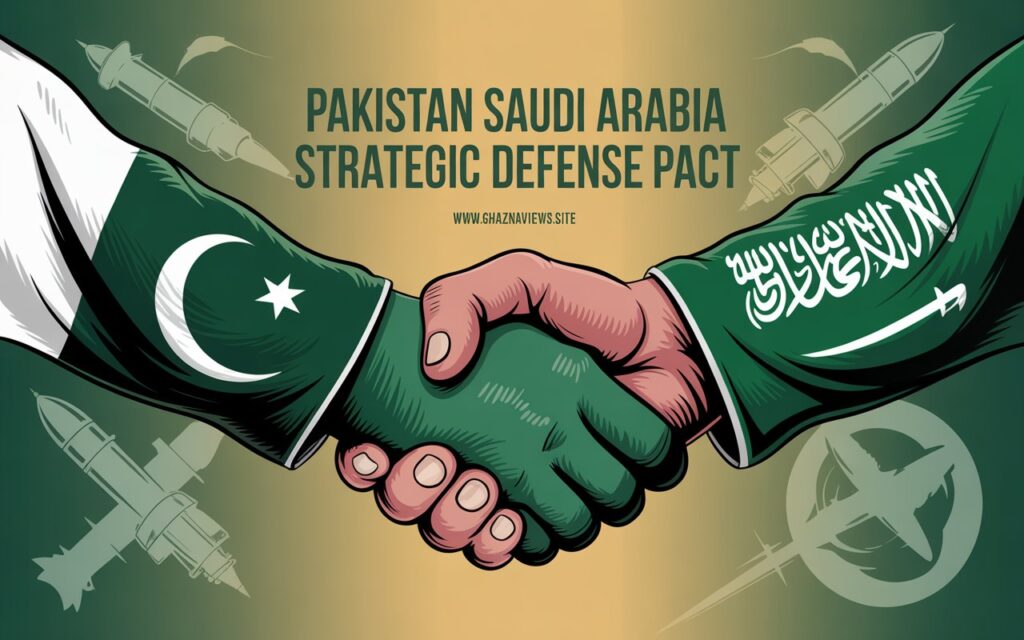
Despite Israeli and U.S. air campaigns damaging Iran’s enrichment facilities in mid-2025, Tehran’s uranium stockpiles remain a source of concern. Much of its material is already enriched close to weapons-grade levels.
Adding to the unease, Saudi Arabia:
- Reportedly plans to build a centrifuge enrichment facility.
- Limits access for IAEA inspectors.
- Has long-standing links to A.Q. Khan, Pakistan’s late nuclear scientist, who supplied sensitive technology abroad.
This deepens suspicions that the kingdom may be laying groundwork for an independent nuclear program.
Historical Context of Saudi Defense Acquisitions
Saudi Arabia’s defense ambitions stretch back decades.
- In 1988, the kingdom secretly purchased Dongfeng-3 ballistic missiles from China. The deal was only uncovered when U.S. satellites detected missiles deployed in the Saudi desert.
- In 1999, Prince Sultan, then Defense Minister and brother of the current King, visited Pakistan’s Kahuta enrichment plant — a move that fueled speculation of nuclear collaboration.
These precedents highlight Riyadh’s long-term desire to acquire strategic deterrence, making the new pact with Pakistan especially significant.
Regional Repercussions
The Pakistan Saudi Arabia strategic defense pact sends ripples across the region:
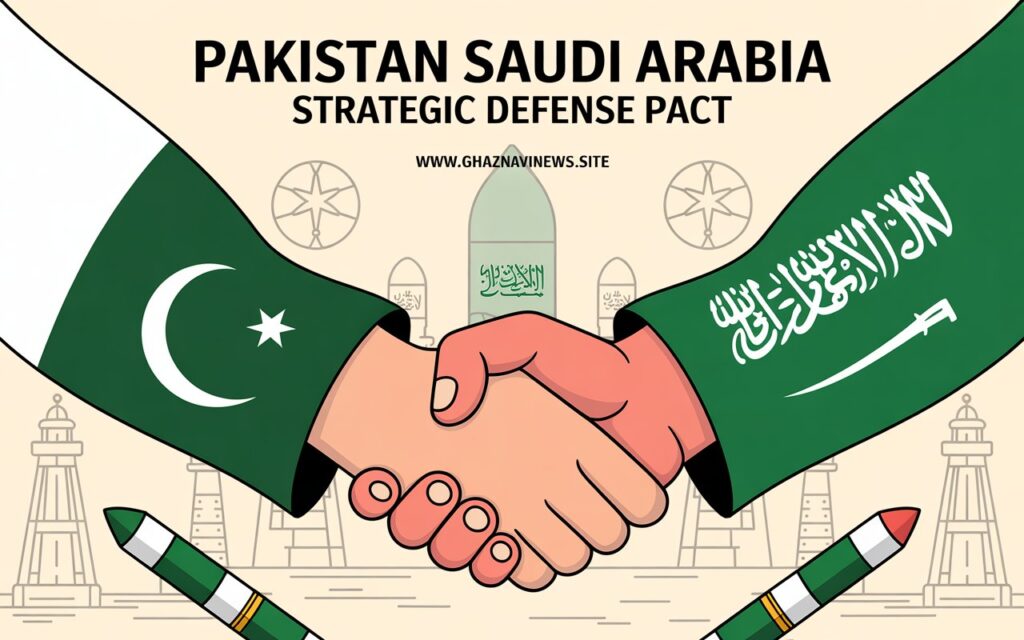
- Iran – Tehran views any Saudi-Pakistani defense alignment as a threat, particularly if it involves nuclear cooperation.
- India – As Pakistan’s main rival and a growing trade partner of Riyadh, India may interpret the pact as undermining its economic and diplomatic advances with Saudi Arabia.
- United States – Washington faces a dilemma. The pact could complicate efforts to secure a U.S.-Saudi nuclear deal and delay Israel-Saudi normalization talks.
- Israel – Israel worries that Saudi nuclear pursuits, even indirectly through Pakistan, could trigger a regional arms race.
Implications for U.S. Diplomacy
For Washington, the pact is troubling on multiple fronts:
- The Biden administration had been exploring a U.S.-Saudi nuclear cooperation agreement, contingent on Saudi-Israel normalization.
- The new pact with Pakistan raises doubts about Riyadh’s commitment to U.S.-brokered deals.
- It could undermine the India-Middle East-Europe Economic Corridor (IMEC), which seeks to connect India and Israel through Saudi Arabia and Jordan.
As IAEA Director General Rafael Grossi recently warned:
“Even in countries that remain compliant with non-proliferation commitments, open discussions are taking place about acquiring nuclear weapons. Imagine a world where several nations — not just a few — pursue nuclear arms.”
The Pakistan-Saudi pact could accelerate such scenarios.
Symbolic or Substantive?
While critics argue the agreement is symbolic, symbolism itself matters in geopolitics. By signing this pact, Pakistan and Saudi Arabia have:
- Reaffirmed their military partnership.
- Sent a clear deterrent signal to Iran.
- Created uncertainty for India’s regional calculus.
- Pressured Washington to reconsider its Middle East strategy.
Even if it stops short of nuclear cooperation, the pact deepens the alignment of two key Muslim nations at a critical geopolitical moment.
Conclusion
The Pakistan Saudi Arabia strategic defense pact may not immediately alter military balances, but it raises serious questions about the future of nuclear proliferation, alliance-building, and U.S. diplomacy in the region. Whether the agreement is primarily symbolic or a foundation for deeper defense collaboration, it has already succeeded in reshaping regional conversations.
The coming months, particularly as Prime Minister Sharif addresses the United Nations General Assembly in New York, will reveal whether this agreement is the start of a historic shift — or a diplomatic maneuver designed to pressure Washington and Tehran alike.
What is the Pakistan Saudi Arabia strategic defense pact?
It is a bilateral defense agreement signed in September 2025 declaring that aggression against one country will be considered aggression against both.
Does the pact include nuclear cooperation?
Officially, neither side has confirmed nuclear sharing, but analysts believe Saudi Arabia may gain access to Pakistan’s nuclear deterrent indirectly.
Why is this pact significant for the U.S.?
The agreement complicates U.S. efforts to finalize a nuclear cooperation deal with Saudi Arabia and undermines Israel-Saudi normalization plans.
How does the pact affect India?
India, a growing trade partner of Saudi Arabia and Pakistan’s main rival, may view the pact as a challenge to its strategic interests.
Could this lead to a nuclear arms race in the Middle East?
Yes, by emboldening Saudi ambitions, the pact could accelerate regional nuclear competition, especially in response to Iran’s program.

Table of Contents
Read More News