
Italy and Spain Deploy Naval Forces for Gaza Flotilla Amid Drone Attacks

Italy and Spain Deploy Naval Forces Gaza Flotilla
The Gaza Flotilla crisis has escalated with Italy and Spain deploying naval forces to support international aid ships sailing toward the besieged Gaza Strip. Organizers of the flotilla, consisting of nearly 50 civilian vessels, reported that the mission—carrying symbolic humanitarian aid such as food and medicine—came under attack by unidentified drones near Greek waters.
On board the ships were hundreds of activists, including climate activist Greta Thunberg and other campaigners. Witnesses reported hearing at least 13 explosions overnight, with drones or aircraft dropping unidentified objects on at least ten vessels. The Italy and Spain deploy naval forces Gaza flotilla mission has sparked global debate on maritime security, humanitarian rights, and international law.
International Humanitarian Mission Under Threat
The flotilla, carrying humanitarian goods, was designed as a symbolic gesture of solidarity with Palestinians in Gaza. However, its journey has faced repeated obstacles. Organizers stated that Israeli officials accused the flotilla of having links to Hamas, a claim they strongly rejected.

Dr. James Smith, a medical doctor aboard the flotilla until last Friday, told DW News that the attacks included flash-bang devices designed to disorient passengers and chemical substances that are currently under investigation. Communication systems were also jammed, with activists reporting bizarre interference such as continuous Swedish pop music being broadcasted to disrupt distress calls.
The Italy and Spain deploy naval forces Gaza flotilla incident highlights the increasingly tense situation at sea, as activists attempt to bypass Israeli naval blockades and deliver aid directly.
Drone Attacks Reported Near Greece
Reports indicate that between 15 and 20 drones circled the flotilla in international waters, dropping explosives and disrupting navigational safety. Activists claimed that their radio lines (VHF) were jammed, preventing them from contacting other ships or sending distress signals.
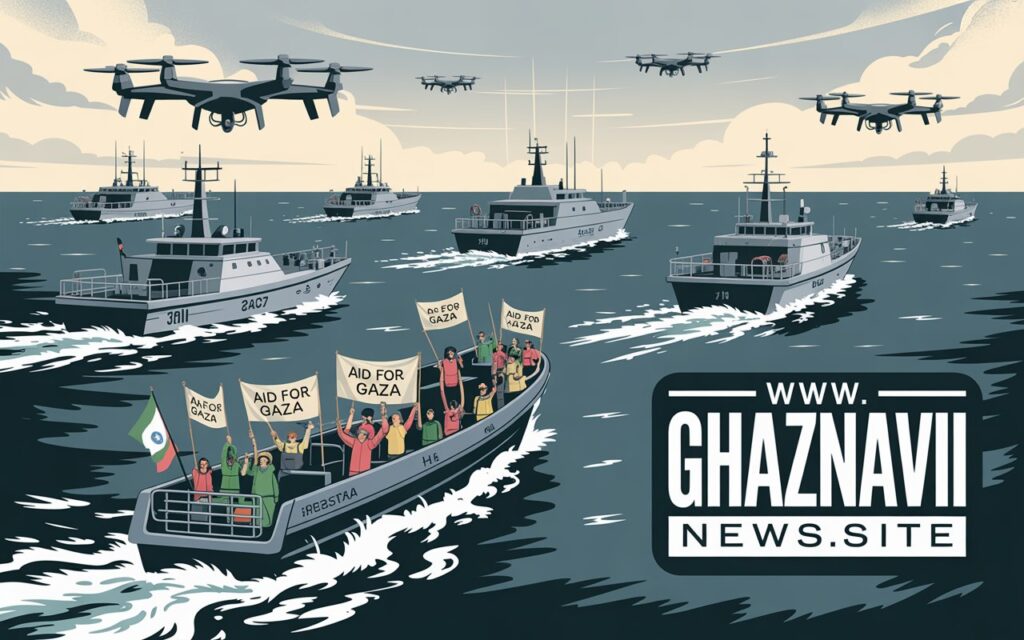
Observers believe the harassment was aimed at discouraging international solidarity movements. Several previous flotillas had also been targeted, with similar allegations of sabotage, signaling a consistent pattern.
With Italy and Spain deploying naval forces Gaza flotilla, European governments appear determined to protect civilian aid missions from external threats while maintaining pressure on Israel to respect international humanitarian law.
Activists Denounce Narrative War
Activists accused Israel of waging a propaganda war against flotillas, framing them as non-humanitarian or politically motivated operations. According to solidarity groups, mainstream media often repeats these accusations without sufficient scrutiny.
Greta Thunberg’s presence on the flotilla has further amplified global attention. Organizers argue that the flotilla represents a purely humanitarian cause, aiming to shed light on Gaza’s blockade and worsening humanitarian conditions.
The Italy and Spain deploy naval forces Gaza flotilla situation is now seen as a test case for Europe’s stance on freedom of navigation and humanitarian access in conflict zones.
Global Diplomatic Implications
The deployment of European naval forces signals a shift in international involvement. By sending warships, Italy and Spain are directly challenging attempts to intimidate or block humanitarian aid. This could complicate already tense EU-Israel relations while increasing pressure on the UN to take a stronger role in maritime monitoring.
If European forces escort the flotilla safely, it may set a precedent for future humanitarian missions, reinforcing the principle that aid delivery should not be obstructed. However, it could also heighten maritime confrontations in the Mediterranean.
The Italy and Spain deploy naval forces Gaza flotilla crisis thus underscores the intersection of humanitarian aid, international politics, and maritime security.
Conclusion
The Gaza flotilla, once seen as a small-scale act of solidarity, has now turned into an international incident involving military forces and drone warfare. The fact that Italy and Spain deployed naval forces reflects growing European concern over humanitarian rights and maritime freedom.
As activists continue their mission, the world watches closely to see whether international law will be upheld—or whether political tensions will once again overshadow the plight of civilians in Gaza.
Why did Italy and Spain deploy naval forces for the Gaza flotilla?
They deployed forces to ensure the safety of humanitarian aid ships facing harassment and possible drone attacks in international waters.
What is the Gaza flotilla carrying?
The flotilla is carrying symbolic humanitarian aid, including food and medical supplies, to highlight the blockade’s impact on Gaza.
Were there any casualties from the drone attacks?
Reports indicate disorienting flash-bang devices and chemical substances were used, but no confirmed casualties have been announced.
Why is Greta Thunberg involved in the flotilla?
Greta Thunberg joined to support humanitarian solidarity with Gaza and raise global awareness of the blockade’s impact.
What are the broader implications of this incident?
It raises serious questions about maritime security, freedom of navigation, and the international community’s response to humanitarian crises.
Table of Contents
Read Latest News Italy and Spain Deploy Naval Forces Gaza Flotilla