
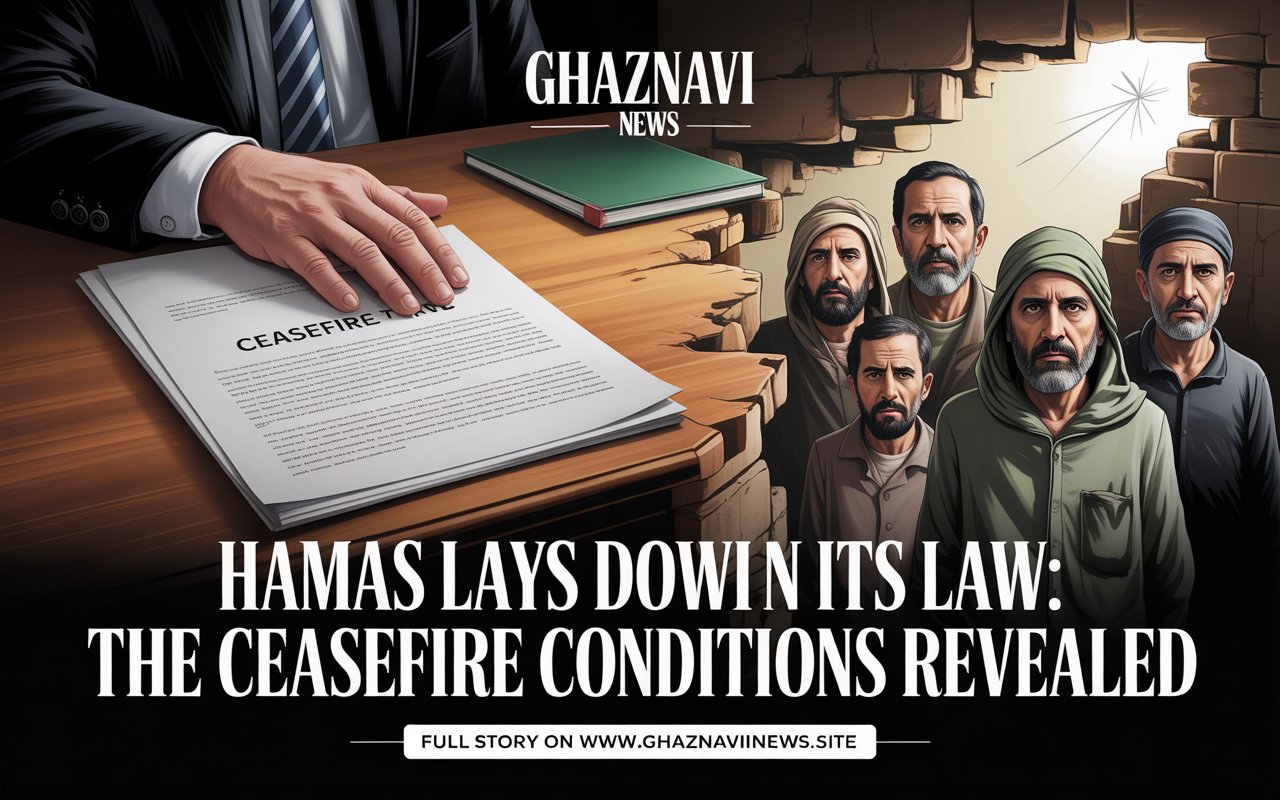
Hamas Lays Out Core Demands in Egypt, Vows to “Overcome Obstacles” for a Deal That Meets Palestinian Aspirations

Ceasefire Conditions
As critical negotiations in Cairo enter a pivotal phase, a senior Hamas official has publicly outlined the group’s central Hamas ceasefire conditions for ending the war in Gaza. Fawzi Barhoum, a prominent spokesperson for the movement, stated that Hamas is engaged in talks to “overcome all obstacles” and secure an agreement that fulfills “the aspirations of our people.” The detailed Hamas ceasefire conditions presented in Egypt represent the most concrete framework to date for what a potential truce would entail, placing the ball firmly in Israel’s court and setting the stage for a decisive moment in the nine-month conflict.
Barhoum’s statement, while strategic in its positive tone, underscores the significant gaps that remain between the warring parties. The core Hamas ceasefire conditions are understood to be non-negotiable from the group’s perspective and are built around several key pillars that address both immediate humanitarian concerns and long-term political outcomes.
The Pillars of Hamas’s Demands
Based on statements from Hamas and Egyptian mediators, the main Hamas ceasefire conditions include:

- A Permanent Ceasefire and Complete Israeli Withdrawal: This is the cornerstone demand. Hamas insists on a permanent end to hostilities, not another temporary truce, accompanied by the full withdrawal of Israeli forces from the entire Gaza Strip.
- Unrestricted Humanitarian Aid and Reconstruction: The plan calls for the immediate and massive flow of aid into Gaza and the commencement of a comprehensive, multi-year reconstruction plan for the tens of thousands of destroyed homes and critical infrastructure, funded by the international community.
- A Secure Prisoner Swap: Hamas demands the release of a significant number of Palestinian prisoners held in Israeli jails, including high-profile veterans and those serving long sentences, in exchange for the remaining Israeli captives held in Gaza.
- A Political Horizon for Governance: A key political condition is ensuring a role for Hamas in any future post-war governance structure for Gaza, rejecting Israeli and US plans that would install a rival Palestinian Authority administration without Palestinian national consensus.
“Overcoming Obstacles” and Regional Implications
Barhoum’s phrase about overcoming “all obstacles” is a direct reference to the primary point of contention: Israel’s repeated refusal to commit to a permanent end to the war as a precondition. The Israeli delegation, led by Mossad chief David Barnea, has maintained a stance focused on a temporary pause to secure the release of captives, followed by the resumption of operations to dismantle Hamas’s military and governing capabilities.
The talks are being closely watched by key regional players, including Qatar and Egypt, who are mediating, and the United States, which is applying pressure for a deal. The detailed Hamas ceasefire conditions provide a clear benchmark for what a sustainable agreement would require. If these Hamas ceasefire conditions are not met, the group has signaled it is prepared to continue the conflict, betting that Israeli domestic pressure and international isolation will eventually force Jerusalem’s hand.
Conclusion: A Defining Moment for Gaza’s Future
The public detailing of the Hamas ceasefire conditions marks a critical juncture. It moves the negotiation from shadowy, indirect talks into the realm of public accountability. By stating its terms clearly, Hamas is appealing to the Palestinian public and the international community, framing itself as a reasonable actor seeking a just and lasting peace.

The world now waits for Israel’s formal response. Will it show the flexibility needed to bridge the chasm between a temporary pause and a permanent ceasefire? The answer will determine whether the Cairo talks collapse into renewed violence or become the foundation for ending a war that has devastated Gaza and reshaped the Middle East.
: What are the main conditions Hamas has set for a ceasefire?
Hamas’s core conditions are a permanent ceasefire, complete Israeli military withdrawal from Gaza, a massive surge in humanitarian aid and a reconstruction plan, a secure prisoner swap, and a guaranteed role in post-war governance.
Where are the talks being held?
The negotiations are currently taking place in Cairo, Egypt, with mediators from Egypt and Qatar shuttling between the Israeli and Hamas delegations.
What is the biggest obstacle to a deal?
The most significant obstacle is Israel’s refusal to agree to a permanent end to the war, as it insists on the right to resume military operations to eliminate Hamas after any temporary truce.
Who is Fawzi Barhoum?
Fawzi Barhoum is an official spokesperson for Hamas, based outside of Gaza. He is a key public voice for the group, communicating its positions to international and Arab media.
How is the US involved in the talks?
The United States is a key player, with CIA Director William Burns involved in discussions. The US is applying significant pressure on both sides, particularly Israel, to reach an agreement.
Table of Contents
Read More News