
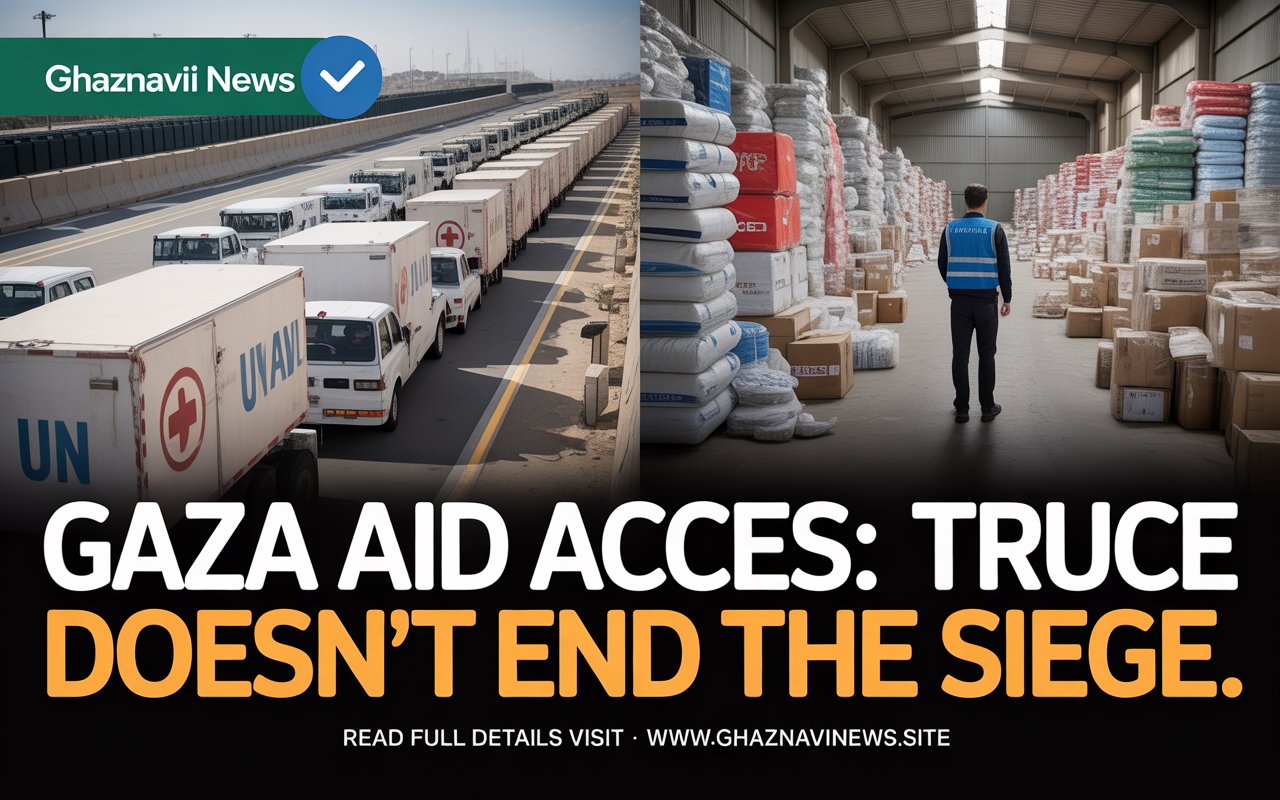
Gaza Aid Access: A Month Into Truce, UN Decries Israeli “Red Tape” and Physical Blockades

A fragile truce may have silenced the guns, but for the beleaguered population of the Gaza Strip, a different kind of crisis—a bureaucratic and logistical stranglehold—is preventing a meaningful recovery. One month after a ceasefire officially took hold, the United Nations has issued a stark and unequivocal condemnation, stating that Israeli obstructions are systematically crippling the flow of lifesaving humanitarian aid. Despite the calm, the mechanisms of deprivation remain firmly in place, creating a man-made bottleneck that is exacerbating the suffering of a population already pushed to the brink. According to the UN’s Office for the Coordination of Humanitarian Affairs (OCHA), the promise of increased Gaza aid access has been broken, replaced by a labyrinth of red tape, closed crossings, and persistent insecurity. This isn’t a simple logistical challenge; it is, according to UN officials, a deliberate and preventable blockage that is undermining the very foundation of the ceasefire and the future of Gaza.
The Bureaucratic Quagmire: How “Red Tape” is Strangling Relief Efforts
In a recent news conference, UN spokesperson Farhan Haq delivered a point-by-point indictment of the current situation, painting a picture of a relief operation hamstrung not by a lack of supplies, but by procedural paralysis.
“One month into the truce, efforts to scale up aid are being hampered by red tape, the continued banning of key humanitarian partners, too few crossings and routes, and insecurity that persists despite the truce,” Haq stated.
The term “red tape” here is not an abstraction. It translates to a grinding, day-to-day reality for aid workers on the ground. Haq provided a concrete example that illustrates the profound operational difficulties: in recent coordinated movements, Israel fully facilitated only two out of eight planned aid missions. Four were blocked on the ground, with one team delayed for ten hours before finally receiving a green light to move. This level of micromanagement and obstruction makes it nearly impossible to plan and execute a coherent, large-scale humanitarian response. In some areas, UN teams are still required to coordinate every single movement in advance with Israeli authorities, turning a simple delivery into a day-long negotiation.
The Physical Blockade: The Crux of the Gaza Aid Access Crisis
Beyond the bureaucratic delays lies the more fundamental issue of physical access. The number of border crossings open for aid remains severely limited. When pressed on why more crossings have not been opened to facilitate the massive influx of aid required, Farhan Haq was direct, placing the responsibility squarely on Israel.
“Well, the hold-up is with Israel. We are asking them and trying to engage with them to open more crossings, but they have not done so yet,” he stated. This simple, damning statement underscores a central contradiction of the post-truce period: while the violence has paused, the siege mentality has not. The continued closure of key transit points is the single greatest physical barrier to Gaza aid access, preventing the volume of food, medicine, shelter materials, and water purification tablets needed to stave off disease and malnutrition from entering the territory.
The Human Cost: A Crisis Compounded by Blockage
The obstruction of Gaza aid access cannot be viewed in a vacuum. It is set against a backdrop of catastrophic human loss and a decimated infrastructure. According to the Gaza Ministry of Health, the preceding months of intense conflict resulted in over 69,000 killed and more than 170,600 injured. These figures represent a society shattered. The healthcare system has collapsed, homes have been reduced to rubble, and the population faces a severe risk of famine.
The UN and its partners are attempting to address a humanitarian catastrophe of historic proportions. The inability to get sufficient aid to those in need means that:
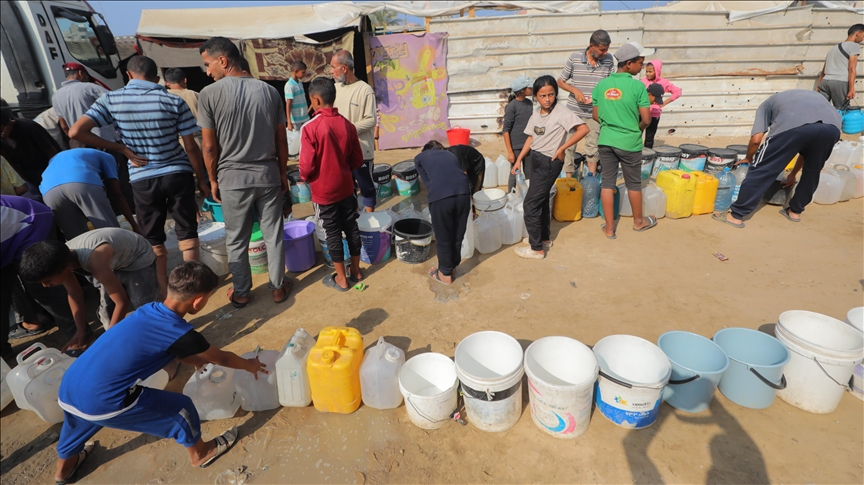
- Disease outbreaks threaten a population living in crowded, unsanitary conditions.
- Malnutrition rates, particularly among children, continue to rise.
- Psychological trauma goes untreated due to a lack of mental health services.
- The foundations for recovery cannot be laid without a consistent and massive flow of construction materials.
The blockage of aid is, in effect, a continuation of the crisis by other means, prolonging the agony of Gaza’s civilians and preventing any chance of early recovery.
A Strategic Failure: The Geopolitics of Aid Obstruction
The reasons behind the continued obstruction of Gaza aid access are complex and deeply political. From the Israeli perspective, stringent controls are necessary to prevent any materials or resources from being diverted by Hamas, which it considers a terrorist organization. This security argument, however, is being wielded in a manner that, according to the UN, collectively punishes the entire civilian population.
The international community, including key allies of Israel, has repeatedly called for a significant increase in the flow of aid. The fact that these calls have gone unheeded, even during a truce, points to a potential political strategy of maintaining leverage over the reconstruction process and the future governance of Gaza. By controlling the tap of humanitarian assistance, Israel retains a significant degree of control over the pace and nature of life in the territory. This strategy, however, comes at a devastating human cost and risks fueling further resentment and instability.
The Path Forward: What Constitutes Meaningful Gaza Aid Access?
The UN’s message is clear: the current level of Gaza aid access is woefully inadequate and the mechanisms for delivery are fundamentally broken. A genuine solution requires more than just allowing a few dozen trucks to pass through a single crossing. It requires:
- The Immediate and Unconditional Opening of All Crossings: Kerem Shalom, Rafah, and other potential routes must be fully operationalized to handle the volume of aid required.
- The Streamlining of Coordination Procedures: The “red tape” and pre-coordination for every movement must be abolished in favor of a system that facilitates, rather than obstructs, aid delivery.
- The Reinstatement of Banned Partners: Key humanitarian organizations that have been barred from operating must be allowed back in to leverage their expertise and capacity.
- A Secure Environment for Aid Workers: Guarantees for the safety and security of humanitarian personnel are essential for operations to expand.
Conclusion: A Truce in Name Only
A truce that does not allow for the free flow of humanitarian aid is a hollow one. The statements from the UN reveal a stark truth: the walls, both physical and bureaucratic, remain higher than ever. For the people of Gaza, the ceasefire has not brought relief, but has instead highlighted a new form of their imprisonment. Until Gaza aid access is treated as a non-negotiable prerequisite for peace and humanity, the truce will remain a temporary pause in violence, not a step toward healing or a durable political solution.
What is the main issue with Gaza aid access according to the UN?
The UN states that one month into the truce, Israeli “red tape,” the closure of most border crossings, bans on key aid groups, and on-ground movement restrictions are systematically blocking humanitarian aid from reaching those in need.
How is “red tape” specifically affecting aid delivery?
UN teams must pre-coordinate every movement with Israeli authorities. In a recent example, 4 out of 8 planned aid missions were blocked on the ground, with one team delayed for 10 hours, making efficient and large-scale relief operations impossible.
Who does the UN say is responsible for not opening more border crossings?
UN spokesperson Farhan Haq explicitly stated that the “hold-up is with Israel,” confirming that the UN has repeatedly asked Israel to open more crossings but that it has refused to do so.
What is the human cost of this aid blockage?
The blockage exacerbates a pre-existing humanitarian catastrophe, preventing treatment for the wounded, staving off famine and disease outbreaks, and halting any meaningful recovery for a population where over 69,000 have been killed and 170,600 injured.
What does the UN say is needed for a real solution?
The UN calls for the immediate opening of all crossings, an end to bureaucratic obstruction, the reinstatement of banned humanitarian partners, and a secure environment for aid workers to operate.
Table of Contents
Read More News Gaza Aid Access

- US Forces Conduct Rare Raid on Cargo Ship Carrying Military Materials from China to Iran
- Trump Administration Launches Historic Pax Silica Alliance to Challenge China’s Rare Earth and Technology Dominance
- South East England Receives £133 Million Boost for Cycling, Walking and Wheeling Infrastructure
- The Hidden Billionaire Village: Inside Cashiers North Carolina’s Wealthy Enclave
- Medway Maritime Hospital A&E Safety Concerns: CQC Report Reveals Mixed Results







[…] Read More News […]