
EU Due Diligence Law Weakened in 3 Major Setbacks That Could Derail Corporate Accountability

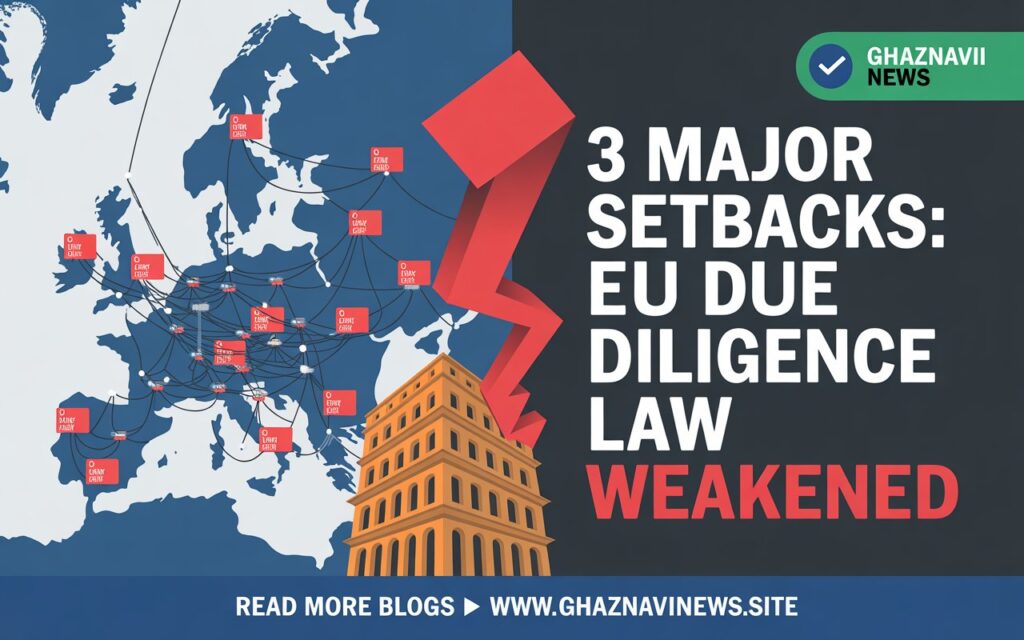
In a dramatic reversal that has alarmed human rights and environmental advocates, European lawmakers have significantly watered down a landmark corporate accountability law. The European Parliament’s legal committee has voted to substantially weaken the Corporate Sustainability Due Diligence Directive (CSDDD), a groundbreaking piece of legislation designed to hold companies accountable for human rights abuses and environmental damage within their global supply chains. This move to scale back the EU due diligence requirements comes after intense pressure from certain industry groups and political factions, raising serious concerns about the future of corporate responsibility on the continent. The proposed rollbacks represent a major setback for years of progressive work aimed at ensuring that European businesses operate ethically and sustainably worldwide. The dilution of the EU due diligence law not only threatens to undermine the bloc’s leadership in responsible business conduct but also risks leaving countless workers and communities vulnerable to exploitation and environmental harm.
The core purpose of the CSDDD was to establish a mandatory EU due diligence framework, compelling companies to identify, prevent, and mitigate adverse impacts of their activities on human rights and the environment. This included everything from modern slavery and forced labor in their supply chains to deforestation and pollution. However, the newly adopted proposals, passed this week, have gutted the directive’s scope and power. The most significant change involves a drastic increase in the thresholds that determine which companies must comply. This strategic weakening of the EU due diligence mandate has sent shockwaves through civil society and has been condemned by a coalition of investors and legal experts who argue that it betrays the very purpose of the law.
1. Drastic Reduction in Companies Covered by the Law
The most impactful change to the EU due diligence rules is the dramatic narrowing of its scope. By raising the eligibility thresholds, the legal committee has effectively exempted thousands of companies from their responsibility to conduct proper oversight.
- Major Threshold Increase: The new proposal stipulates that the directive will only apply to companies with 5,000 or more employees and a turnover of €1.5 billion. This is a major retreat from the previously agreed threshold of 1,000 employees and €450 million in turnover.
- Exempting High-Risk Sectors: This change will drastically reduce the number of companies required to identify and address issues like modern slavery, forced labor, and environmental damage in their operations and supply chains. Critically, it could exclude thousands of companies linked to high-risk sectors such as agriculture, textiles, and renewable energy, creating massive gaps in EU due diligence coverage.
- Consequences for Workers: The practical outcome of this rollback is that numerous businesses with complex and sprawling international supply chains will no longer be legally obligated to perform rigorous checks. This leaves workers in those supply chains at a significantly higher risk of abuse and misconduct, as corporate oversight becomes a matter of voluntary goodwill rather than legal requirement.
2. Removal of Climate Transition Plan Obligations
In another major blow to the directive’s environmental ambitions, lawmakers voted to remove a key obligation for companies to develop and implement climate transition plans.
- A Key Climate Measure: The requirement for companies to create climate transition plans was a cornerstone of the directive, designed to align business activities with the European Union’s climate commitments and the goals of the Paris Agreement. This EU due diligence component was meant to ensure that corporate strategies actively contribute to a net-zero future.
- Weakening Climate Accountability: By stripping out this obligation, the revised directive severs a crucial link between corporate due diligence and climate action. Companies will no longer be legally required to demonstrate how their business models and operations will transition to a low-carbon economy. This represents a significant step backward in the EU’s fight against climate change and undermines the bloc’s own Green Deal objectives.
- Investor Concerns: This removal is particularly concerning for investors who are increasingly using climate transition plans as a metric for assessing long-term corporate viability and climate-related risks. The weakened EU due diligence rules now provide less reliable data for making informed investment decisions.
The push to dilute the EU due diligence law did not occur in a vacuum. It is the result of sustained pressure from some European industries and political groups who have voiced concerns about business costs and regulatory complexity, arguing for a more “business-friendly” approach. However, this short-term focus on reducing compliance burdens ignores the long-term economic and reputational risks of unchecked corporate malpractice. Furthermore, the international context makes this weakening particularly significant. Countries like Australia, Thailand, and Indonesia, which are currently considering introducing their own mandatory due diligence laws, are closely watching the developments in the European Union. The ongoing debate and uncertainty in the EU now risk stalling progress not just in Europe but globally, as other nations may hesitate to implement strong laws if the bloc itself is backtracking. The EU due diligence directive was intended to set a global gold standard; its dilution sends a dangerous message that corporate accountability is negotiable. The legal committee also voted to reject a broader civil liability regime for the EU, which would have made it significantly easier for victims to hold companies accountable in court. This further erodes the EU due diligence framework’s enforcement mechanism and access to justice for those harmed by corporate activities.
3. International Lobbying and Political Divisions
The weakening of the CSDDD highlights deep political divisions within the EU and the powerful influence of international lobbying efforts, which have collectively worked to undermine a robust EU due diligence standard.
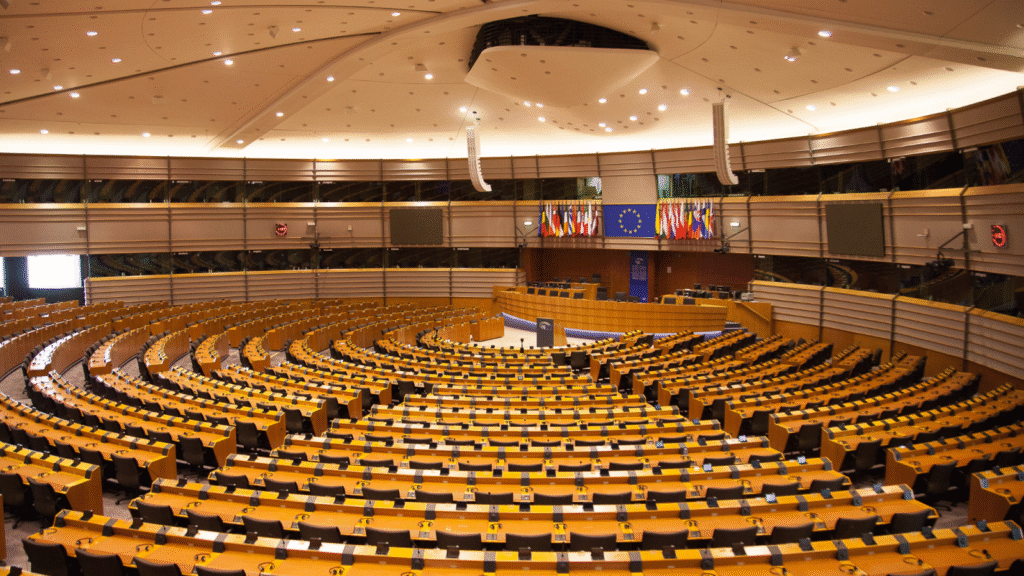
Table of Contents
- Member State Pressure: Several EU governments, including France and Germany, had already expressed support for scaling back the directive’s scope, citing competitiveness concerns. This internal pressure from powerful member states created a challenging environment for lawmakers who supported a stronger directive.
- Foreign Lobbying: International lobbying from countries like the United States and Qatar added another layer of pressure. These nations pushed to limit the directive’s reach over foreign companies, seeking to protect their own corporate interests from the EU due diligence requirements. This external influence has played a significant role in shaping the final, weakened proposal.
- A Fight for the Directive’s Soul: Despite these challenges, a coalition of supportive lawmakers, investors, and advocacy organizations like the Walk Free Foundation continue to urge the EU to maintain a strong and effective CSDDD. They argue that the directive must prioritize the protection of people and the planet over short-term political and economic concessions. The coming negotiations between the Parliament and EU member states will be a critical battleground for the soul of the EU due diligence law.
The legal committee’s vote is not the final word. It allows for negotiations to begin with the EU member states, and a full parliamentary vote could still be requested in the coming weeks. This provides a crucial window for advocacy and pressure. The fundamental question remains: Will the European Union uphold its commitment to being a global leader in corporate accountability, or will it allow a weakened EU due diligence law to pass, setting a dangerous precedent and failing to protect the most vulnerable in global supply chains? The world is watching.
What is the EU due diligence law (CSDDD)?
The Corporate Sustainability Due Diligence Directive (CSDDD) is a proposed EU law that would require companies to identify, prevent, and address human rights abuses and environmental harm in their own operations and supply chains.
How has the law been weakened?
Lawmakers raised the company threshold from 1,000 to 5,000 employees, removed the requirement for climate transition plans, and rejected a broader civil liability system, significantly reducing the law’s scope and power.
Why are critics concerned about these changes?
Critics warn that weakening the law will leave thousands of companies unregulated, expose more workers to exploitation, undermine climate goals, and damage the EU’s leadership on corporate accountability.
What happens next with the legislation?
The vote allows negotiations with EU member states to begin. A full parliamentary vote can still be requested, and advocacy groups are pushing to restore the law’s original strength.
Read More News









[…] Read More News […]