
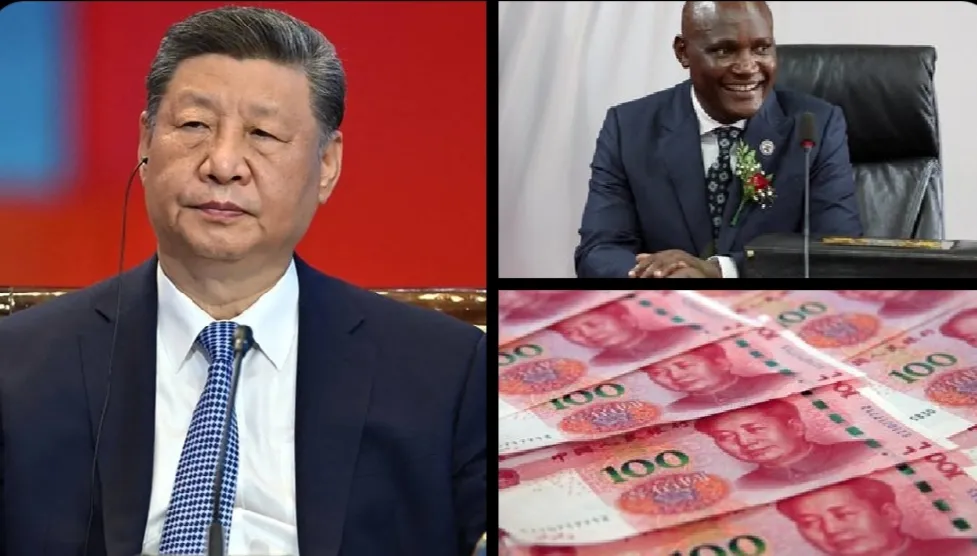
In Yuan We Trust? Ethiopia Enters Talks With China To Convert Dollar Loans, Accelerating Global Shift From USD

In a move that signals a profound realignment in global finance, the Federal Democratic Republic of Ethiopia has formally entered high-stakes negotiations with Beijing to Ethiopia convert dollar loans yuan held from Chinese creditors. This strategic maneuver, coming hot on the heels of a similar decision by neighboring Kenya, marks a significant acceleration in the “de-dollarization” trend sweeping across the Global South and represents a pivotal moment where a key African economy seeks to Ethiopia convert dollar loans yuan to shield itself from Western financial pressure and a strengthening US dollar.
The initiative, confirmed by senior officials at the Ethiopian Finance Ministry, aims to restructure billions of dollars in debt under China’s Belt and Road Initiative (BRI). The primary motivation for Ethiopia to Ethiopia convert dollar loans yuan is twofold: to mitigate the severe economic strain caused by the US Federal Reserve’s interest rate hikes, which have inflated debt servicing costs and drained foreign reserves, and to insulate its economy from the geopolitical risks associated with the US dollar’s dominance.
The Mechanics and Motivation Behind the Move
For Ethiopia, the decision to Ethiopia convert dollar loans yuan is a pragmatic calculation of risk and survival. Servicing dollar-denominated debt requires a constant supply of US dollars, which has become increasingly scarce and expensive for many developing nations. By converting these obligations into yuan, Ethiopia can utilize its growing bilateral trade with China—much of which is already conducted in local currencies—to service its debts, thereby reducing its exposure to dollar volatility.
A senior economic advisor to the government explained, “The move to Ethiopia convert dollar loans yuan is not just about economics; it’s about strategic autonomy. It diversifies our currency risk and deepens our partnership with our largest bilateral creditor and trading partner, offering more flexibility in a turbulent global financial landscape.”
A Continental Domino Effect?
Ethiopia’s move is not happening in a vacuum. Kenya’s recent agreement to pay for its oil imports in Chinese currency and settle a portion of its debt with yuan has created a playbook for other African nations struggling with similar dollar shortages. The fact that Ethiopia, a diplomatic heavyweight in East Africa, is now seeking to Ethiopia convert dollar loans yuan could trigger a domino effect, encouraging other BRI partner nations like Zambia and Angola to pursue similar debt restructuring arrangements.
This collective shift poses a direct challenge to the post-World War II financial order, where the US dollar has reigned supreme as the world’s primary reserve and trade currency. While the dollar is not in immediate danger of being dethroned, the concerted effort by emerging economies to Ethiopia convert dollar loans yuan and other non-Western currencies indicates a fragmented, multi-currency financial system is on the horizon.
Global Repercussions and the Washington Consensus
The geopolitical implications are immense. For China, every successful negotiation to Ethiopia convert dollar loans yuan extends the international reach of its currency, bolstering its campaign to internationalize the yuan and reduce its own dependency on the dollar. It also deepens China’s economic and political influence across Africa, binding key nations closer to Beijing’s orbit.
For the United States and Western financial institutions, this trend is a clear warning. The weaponization of the dollar through sanctions has prompted rivals and even neutral states to seek alternatives. The move by Ethiopia to Ethiopia convert dollar loans yuan is a tangible consequence, demonstrating that the “exorbitant privilege” of the dollar may be its own greatest vulnerability in the long term. As more countries follow this path, the foundation of the Washington Consensus grows increasingly unstable.