
Egypt, Qatar, Turkey Sign Trump’s Gaza Ceasefire Deal in Historic Middle East Breakthrough

In a dramatic diplomatic breakthrough that could reshape the Middle East, Egypt, Qatar, and Turkey have formally signed a declaration guaranteeing a Gaza ceasefire deal alongside US President Donald Trump. The signing ceremony, held in the Egyptian resort city of Sharm El-Sheikh, marks a pivotal moment in the effort to stabilize the truce between Israel and Hamas, coming just hours after the warring parties completed a final exchange of hostages and prisoners. President Trump, who embarked on a whirlwind Middle East tour to cement his role as the architect of the peace process, welcomed the development as a “great day for the world, a great day for the Middle East.” This powerful regional endorsement from three key nations—Egypt, Qatar, and Turkey—as guarantors provides a crucial international framework for a Gaza ceasefire deal that has thus far been precarious. The event signifies the most significant step toward lasting peace in the region in years, though formidable challenges to a permanent resolution remain.
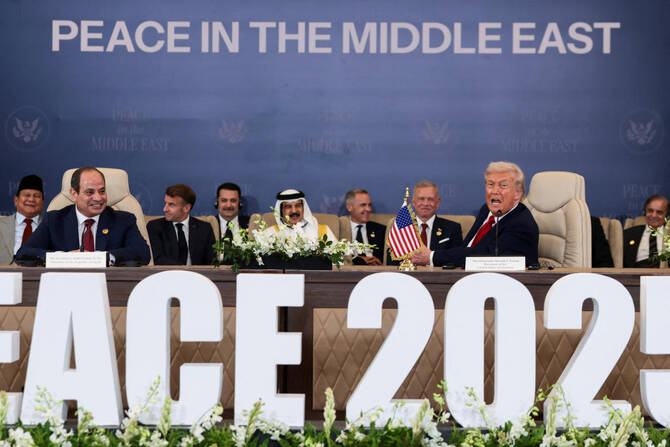
The path to this historic moment began with Trump’s late September announcement of a 20-point plan for Gaza, which helped catalyze the initial truce. The deal culminated on Monday when Hamas released the final 20 living hostages held in Gaza after two years of captivity. In a reciprocal move that underscored the scale of the agreement, Israel released a staggering 1,968 Palestinian prisoners who had been held in its jails. This massive exchange was a key component of Trump’s plan to end the Gaza war and served as the essential confidence-building measure that paved the way for the broader diplomatic agreement signed in Sharm El-Sheikh. The presence of two dozen world leaders at the summit underscored the global significance of this Gaza ceasefire deal, which aims to halt a conflict that has claimed at least 67,869 lives in Gaza according to the Hamas-run health ministry, figures the United Nations deems credible.
1. The Sharm El-Sheikh Signing Ceremony and Regional Guarantors
The signing ceremony in Sharm El-Sheikh represented the formalization of a Gaza ceasefire deal that had been painstakingly negotiated over weeks of behind-the-scenes diplomacy. The event brought together the key regional powers who will now act as guarantors for the agreement’s implementation.
- A Powerful Coalition of Guarantors: The participation of Egypt, Qatar, and Turkey as signatories is strategically significant. Each nation brings unique leverage and channels of influence to the table. Egypt shares a border with Gaza and has historically played a mediator role. Qatar has financially supported Gaza and maintained communication channels with Hamas. Turkey, under President Recep Tayyip Erdogan, has been a vocal critic of Israel’s military campaign. Their collective endorsement as guarantors of the Gaza ceasefire deal adds substantial weight and monitoring capacity to the agreement.
- Trump’s Confident Declaration: During the joint appearance with Egyptian President Abdel Fattah al-Sisi, Trump expressed strong confidence that the ceasefire would hold. “It’s started, as far as I’m concerned, Phase 2 has started,” he declared, indicating his belief that the agreement would move beyond the initial hostage exchange into a more stable phase of de-escalation. He added, “The phases have blended into each other a little bit,” suggesting a fluid but progressive implementation process.
- Praise for Key Partners: Trump specifically praised President Sisi for playing a “very important part” in negotiations with Hamas. This acknowledgment highlights Egypt’s central role as a mediator throughout the conflict. In return, Sisi credited Trump, stating that the American president had the “ability to bring peace to our region,” a significant endorsement from a key Arab leader.
2. The Hostage-Prisoner Exchange: Foundation for the Ceasefire
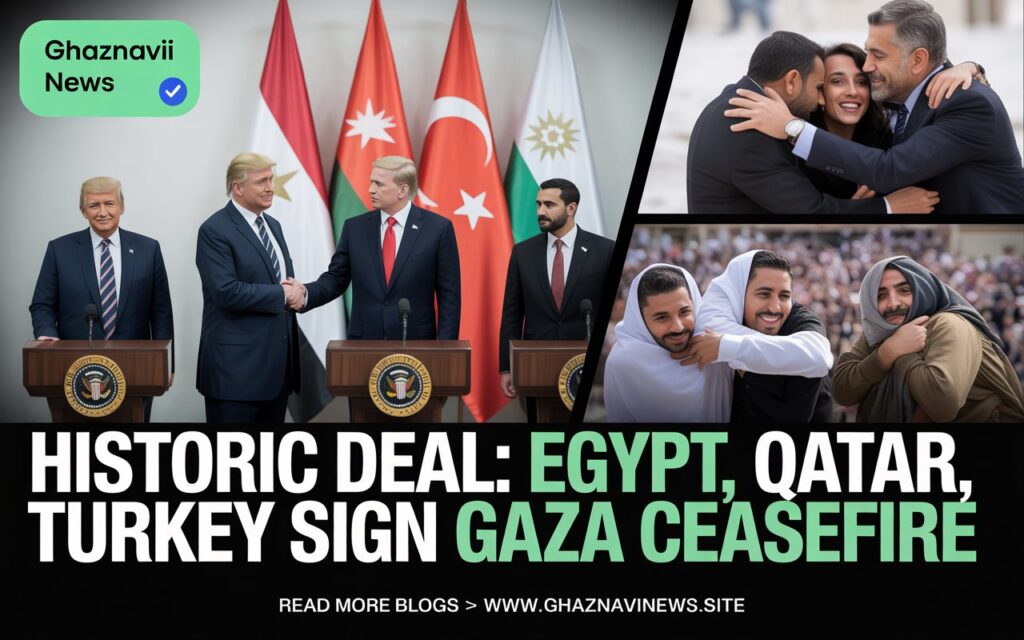
The successful completion of the hostage-prisoner exchange served as the critical foundation upon which the broader Gaza ceasefire deal was built. This humanitarian exchange demonstrated good faith from both sides and created the necessary momentum for the diplomatic agreement that followed.
- The Final 20 Hostages: The release of the final 20 living hostages marked a monumental moment for Israel, where the return of all captives has been a national priority. These individuals had endured two years of captivity in Gaza, and their release brought closure to one of the most painful chapters of the conflict for Israeli society.
- Mass Prisoner Release: In return, Israel’s release of 1,968 Palestinian prisoners represented one of the largest such exchanges in the history of the conflict. This concession was politically challenging for Prime Minister Benjamin Netanyahu’s government but was essential for securing Hamas’s agreement to the Gaza ceasefire deal. The scale of the release addressed a key demand from the Palestinian side and demonstrated Israel’s commitment to the agreement.
- A Necessary Humanitarian Step: Beyond its political significance, the exchange represented a crucial humanitarian breakthrough. Families on both sides were reunited after years of separation and uncertainty, providing a human face to the diplomatic process and generating public support for the continued implementation of the Gaza ceasefire deal.
While the signing of the Gaza ceasefire deal represents a monumental achievement, the agreement faces significant challenges that could threaten its long-term sustainability. The Sharm El-Sheikh summit notably excluded direct representatives from both Israel and Hamas, instead bringing together the international guarantors and Palestinian President Mahmoud Abbas, with whom Trump held a brief meeting. This structure highlights the ongoing refusal of both primary parties to engage directly with one another. Potential sticking points remain substantial. Hamas has repeatedly refused to disarm, a key Israeli demand for any permanent peace. Similarly, Israel has thus far failed to promise a complete withdrawal from the devastated Gaza territory. Hamas spokesperson Hazem Qasem emphasized these concerns, urging Trump and the ceasefire mediators to “continue monitoring Israel’s behavior and ensure it does not resume its aggression against our people.” The successful implementation of this Gaza ceasefire deal will require navigating these fundamental disagreements. The role of Egypt, Qatar, and Turkey as guarantors will be crucial in maintaining pressure on both sides to uphold their commitments and gradually address these more contentious issues. The alternative—a collapse of the truce—would likely result in a rapid return to the devastating violence that has characterized the conflict, with Hamas continuing to govern Gaza and Israel maintaining its security blockade. The Gaza ceasefire deal therefore represents not a final solution, but a critical pause that creates space for more complex negotiations about Gaza’s future governance and security arrangements.
3. The Road Ahead: Challenges and the “Phase 2” Implementation
President Trump’s declaration that “Phase 2 has started” points to the complex implementation process that lies ahead for the Gaza ceasefire deal. This next phase will test whether the temporary truce can evolve into a more durable peace.

- Monitoring and Enforcement: The primary role of the three guarantor nations will be to monitor compliance with the ceasefire terms and intervene diplomatically if violations occur. This will require establishing joint monitoring mechanisms, likely involving observers on the ground, to verify that both sides are adhering to the agreement.
- Addressing Core Issues: For the Gaza ceasefire deal to become permanent, negotiations must eventually address the core issues that have perpetuated the conflict. This includes the status of Hamas as Gaza’s governing authority, Israel’s security concerns, the reconstruction of the devastated territory, and the long-term political future of the Palestinian people.
- The Humanitarian Crisis: Even with the ceasefire in place, Gaza faces a monumental humanitarian crisis. The territory requires massive reconstruction of its infrastructure, including homes, hospitals, schools, and water systems. The international community, led by the agreement’s guarantors, will need to coordinate a comprehensive aid and reconstruction plan to address the immediate suffering of Gaza’s population and create conditions for stability.
The signing of the Gaza ceasefire deal by Egypt, Qatar, and Turkey alongside President Trump represents the most hopeful development in the region in years. It has stopped the bloodshed, secured the release of hostages and prisoners, and created a framework for continued diplomacy. However, the agreement remains fragile. Its long-term success will depend on the willingness of both Israel and Hamas to make further compromises and the ability of the international guarantors to maintain sustained engagement and pressure. For now, the people of Gaza and Israel have been granted a reprieve from violence—the first step on what will undoubtedly be a long and difficult road toward a comprehensive peace.
Which countries signed the Gaza ceasefire deal with Trump?
Egypt, Qatar, and Turkey signed the declaration as guarantors of the Gaza ceasefire deal alongside US President Donald Trump at a summit in Sharm El-Sheikh, Egypt
What was exchanged as part of the ceasefire agreement?
Hamas released the final 20 living hostages held in Gaza, and Israel released 1,968 Palestinian prisoners in one of the largest prisoner exchanges in the conflict’s history.
What did Trump say about the ceasefire?
President Trump called it a “great day for the world, a great day for the Middle East” and stated that “Phase 2 has started” in the implementation of the agreement.
What are the main challenges to the ceasefire holding?
Major challenges include Hamas’s refusal to disarm, Israel’s failure to commit to a complete withdrawal from Gaza, and the need for reconstruction of the devastated territory.
Table of Contents
Read More News