
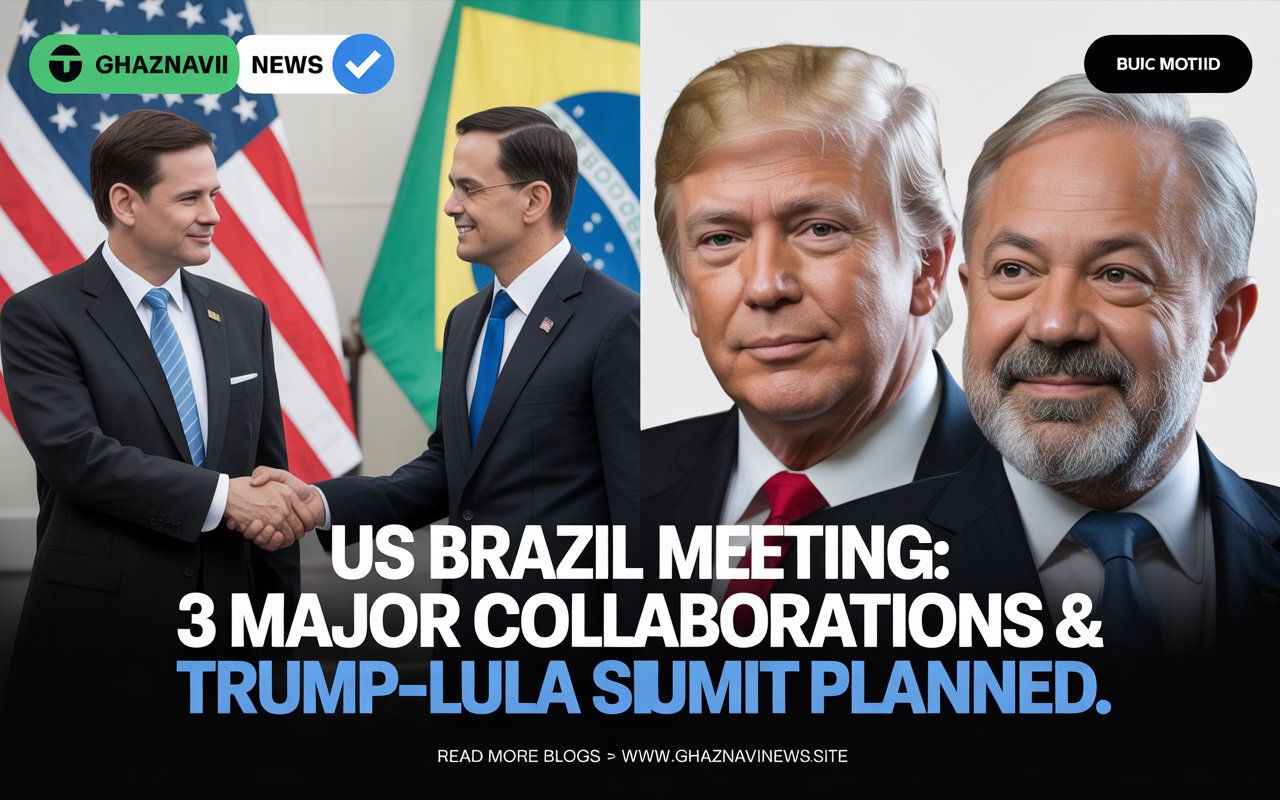
US Brazil Meeting Sets Stage for 3 Major Collaborations and Potential Trump-Lula Summit

In a significant diplomatic engagement that could reshape Western Hemisphere relations, high-level officials from the United States and Brazil have concluded a “very positive” US Brazil meeting focused on trade and ongoing bilateral matters. The meeting brought together US Secretary of State Marco Rubio, US Trade Representative Jamison Greer, and Brazil’s Foreign Minister Mauro Vieira, signaling a concerted effort from both nations to strengthen their strategic partnership. The high-stakes US Brazil meeting successfully established a pathway for the two largest economies in the Americas to advance cooperation and dialogue on numerous fronts in the near future. Perhaps most notably, both parties agreed to work together to schedule a summit between President Donald Trump and President Luiz Inácio Lula da Silva in the very near future, a move that could dramatically alter the geopolitical landscape of the region. This productive US Brazil meeting represents a crucial step in managing the complex relationship between two continental powers with occasionally divergent political and economic interests but significant shared goals.
The presence of such high-ranking officials from both countries underscores the importance each government places on this bilateral relationship. Secretary Rubio, a key figure in US foreign policy, and Ambassador Greer, the nation’s top trade negotiator, meeting jointly with Brazil’s top diplomat indicates that the discussions covered both broad strategic alignment and specific, actionable trade issues. The characterization of the talks as “very positive” suggests that despite underlying tensions—including differing approaches to climate change, China, and regional governance—both sides found substantial common ground. The successful US Brazil meeting lays the foundation for a more predictable and cooperative phase in a relationship that has experienced both warm camaraderie and notable friction in recent years, depending on the administrations in power.
1. Establishing a Framework for Multi-Front Cooperation
The primary achievement of the US Brazil meeting was the establishment of a clear pathway to advance cooperation across “numerous fronts.” This vague but promising language suggests that working groups or specific dialogues will be established to tackle a range of shared interests.
- Trade and Economic Partnerships: Given USTR Jamison Greer’s involvement, trade was undoubtedly a central topic. The US and Brazil have a complex trade relationship, with tensions over steel and aluminum tariffs, agricultural subsidies, and market access. This US Brazil meeting likely aimed to resolve some of these sticking points and explore new areas for economic partnership, potentially in technology, energy, and critical minerals.
- Regional Security Collaboration: As the dominant powers in their respective halves of the Americas, security cooperation is a logical area for collaboration. This could involve coordinated efforts on transnational crime, drug trafficking, and cybersecurity. The US Brazil meeting may have set the stage for increased intelligence sharing and joint training exercises.
- Environmental and Energy Diplomacy: Despite differing public postures on climate change, both nations have immense interests in the Amazon and the broader environmental health of the continent. The US Brazil meeting could pave the way for US investment in sustainable development in Brazil and cooperation on green energy technologies, balancing economic and ecological interests.
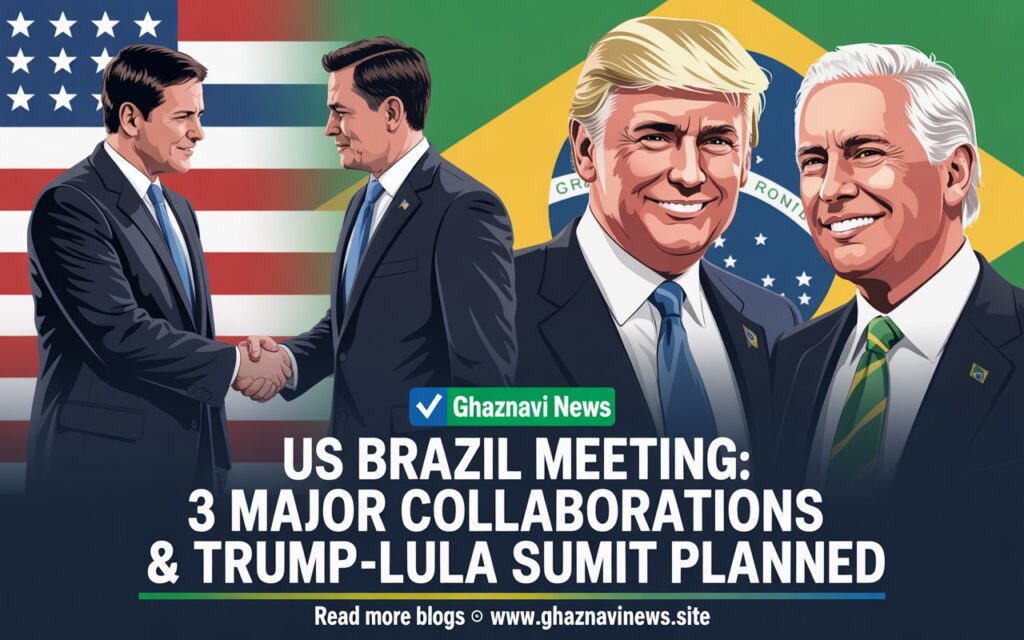
2. The Path to a Trump-Lula Presidential Summit
The most politically significant outcome of the US Brazil meeting was the mutual agreement to work toward scheduling a face-to-face meeting between President Trump and President Lula.
- A Meeting of Contrasting Titans: A Trump-Lula summit would be a spectacle of contrasting political styles and ideologies. President Trump represents a nationalist, America-first conservatism, while President Lula leads a leftist, Global South-focused workers’ party. Despite these differences, both are populist figures with a proven ability to connect with their bases, making their interaction highly unpredictable and newsworthy.
- Strategic Imperatives for Both Sides: For the US, a summit reinforces American engagement in Latin America and provides a counterweight to growing Chinese and Russian influence in the region. For Brazil, a direct channel to the US president ensures its voice is heard on the global stage and could unlock economic benefits. The US Brazil meeting at the ministerial level was essential to prepare the groundwork for such a high-stakes encounter.
- Potential Agenda Items: A presidential summit would likely focus on grand strategy: coordinating approaches to Venezuela, discussing the future of multilateral institutions like the UN, and forging a common understanding on major global issues. The success of the ministerial US Brazil meeting makes this high-level dialogue a much more feasible prospect.
The success of this US Brazil meeting cannot be understood in isolation. It occurs against a backdrop of shifting global alliances and economic uncertainty. For the United States, a strong partnership with Brazil is a key component of its strategy for the Western Hemisphere, serving as a bulwark against the influence of adversarial powers like China, which has become Brazil’s largest trading partner. For Brazil, skilfully managing its relationship with the US is essential for its economic development and geopolitical standing. The “very positive” nature of this US Brazil meeting suggests that both sides recognized the strategic necessity of finding common ground, even while acknowledging their differences. The officials at this US Brazil meeting demonstrated a pragmatic understanding that cooperation between the hemisphere’s giants is not just beneficial but essential for regional stability and prosperity. The agreement to advance on “numerous fronts” indicates that this was not a meeting focused on a single transaction, but rather on building a multifaceted partnership capable of withstanding political changes in both capitals. This US Brazil meeting therefore represents a long-term investment in a stable and productive bilateral relationship.
Advertisement

3. Navigating Political Differences for Mutual Gain
The underlying story of this US Brazil meeting is the ability of both nations to navigate their significant political differences in pursuit of mutual benefit.
- Bridging Ideological Gaps: The Trump administration and the Lula administration have starkly different worldviews on issues like climate change, multilateralism, and social policy. The fact that a productive US Brazil meeting could occur despite these differences is a testament to the professionalism of the diplomatic corps and the recognition that national interests often transcend ideology.
- The Role of Diplomatic Machinery: This meeting highlights the importance of established diplomatic channels. Even when presidential relationships are uncertain or untested, secretaries of state, trade representatives, and foreign ministers can maintain functional dialogue. This US Brazil meeting ensured that the bilateral relationship continued to move forward, regardless of the political noise.
- A Model for Future Engagement: The constructive tone of this US Brazil meeting could serve as a model for how nations with different governing philosophies can engage productively. By focusing on concrete areas of cooperation like trade and scheduling a leaders’ summit, the diplomats created positive momentum that can help overcome broader political disagreements.
The recent US Brazil meeting has successfully reopened a channel of high-level communication and set a collaborative agenda for the future. By agreeing to advance cooperation on multiple fronts and work toward a presidential summit, Secretary Rubio, Ambassador Greer, and Foreign Minister Vieira have injected much-needed positivity into one of the most important bilateral relationships in the Americas. The world will now watch closely to see if the momentum from this diplomatic US Brazil meeting translates into a historic Trump-Lula summit and a new chapter of pragmatic cooperation between the Western Hemisphere’s two giants.
Who attended the US Brazil meeting?
The meeting included US Secretary of State Marco Rubio, US Trade Representative Jamison Greer, and Brazil’s Foreign Minister Mauro Vieira.
What was the main outcome of the meeting?
Officials established a pathway for cooperation on numerous fronts and agreed to work toward scheduling a summit between Presidents Trump and Lula.
Why is a Trump-Lula summit significant?
It would bring together two of the most influential but politically divergent leaders in the Western Hemisphere, with major implications for regional trade, security, and diplomacy.
What does “multi-front cooperation” mean?
It suggests the US and Brazil will collaborate on various issues including trade, security, and potentially environmental and energy policies, moving beyond single-issue discussions.
Table of Contents
Read More News








[…] Read More News […]