

Derby School Car Ban Creates UK’s Latest Permanent Safe Haven For Children

School Car Ban
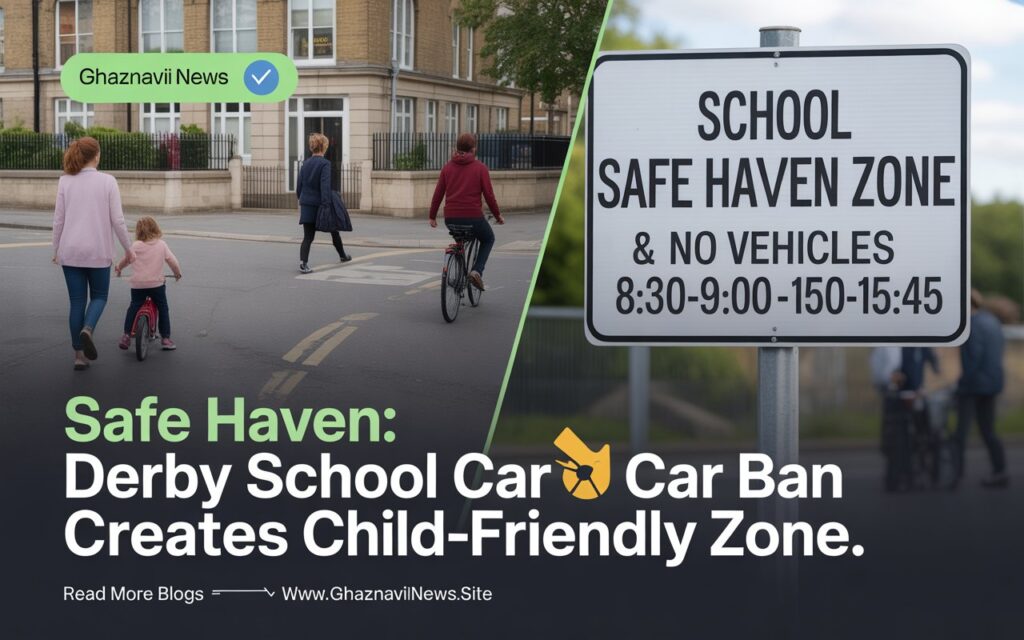
A revolutionary step towards child safety and urban health is unfolding at the gates of a Derby primary school. In a bold move, a permanent school car ban has been enforced outside Castleward School on Canal Street, prohibiting motor vehicles during all drop-off and pick-up times. This decisive action, announced by Derby City Council, follows highly successful trials of the scheme and marks the official launch of a “School Safe Haven Zone” starting this Monday. The initiative is designed to dramatically improve air quality and safety for students, creating a protective bubble around the school premises during its most congested hours. This transformative school car ban represents a growing national trend of prioritizing children’s well-being over vehicular convenience, setting a powerful precedent for communities across the United Kingdom.
The new restrictions are precise and unwavering. The school car ban will be active from 08:30 to 09:00 and again from 15:00 to 15:45, Monday through Friday. During these critical periods, the only exceptions will be for pre-approved permit holders. The Labour-run authority has made it clear that vehicles will not be able to access Canal Street between London Road and Carrington Street within this timeframe. It is crucial to note that the legal traffic order enforcing this school car ban is specifically designed to apply only during the school term, ensuring the measures are in effect precisely when children are present. This targeted approach maximizes the safety benefits while minimizing unnecessary disruption to the wider community outside of school hours.
The Operational Blueprint of the School Car Ban
The implementation of the school car ban is not a simple matter of placing barriers. It is part of a comprehensive traffic management overhaul engineered to create a seamless and secure environment for children and parents alike.
- A New One-Way System: To complement the restrictions, a new one-way system has been introduced on Canal Street. This change, coupled with alterations at the Carrington Street junction, is strategically designed to reduce overall traffic volume in the immediate vicinity. The primary goal is to enhance safety for pedestrians, making the walk to school less intimidating and dangerous for families.
- Removal of Previous Restrictions: In a balancing act, the council has also removed a previous one-way system on Carrington Street between Canal Street and Trinity Street. This indicates a holistic review of the area’s traffic flow, ensuring that the new school car ban and associated changes work in harmony to improve circulation rather than simply displacing congestion to adjacent streets. This thoughtful planning is essential for the long-term viability and community acceptance of the scheme.
The physical changes to the road layout are a critical component. They signal a permanent shift in the area’s identity from a thoroughfare to a dedicated child-safe space. The new one-way system physically calms traffic, while the removal of the old system prevents conflicting directives for drivers. This creates a clear, intuitive new normal for the neighborhood, reinforcing the school car ban not as a temporary inconvenience but as a foundational part of the area’s upgraded infrastructure.

The Driving Philosophy: More Than Just Reducing Traffic
For the council and school advocates, this initiative transcends the immediate goal of clearing cars from the school gates. The school car ban is a multifaceted policy with profound long-term ambitions for public health and community habits.
Councillor Carmel Swan articulated the broader vision with immense pride. “We are incredibly proud of the hugely positive impacts our School Safe Havens have already delivered, and I’m delighted that we are extending the benefits to the Castleward School community,” she stated. Her comments highlight the proven success of similar schemes elsewhere in Derby, building a compelling case for this expansion. She further clarified that the mission is far greater than just traffic reduction. “It isn’t just about reducing traffic; it’s about making sure our children are safe outside the school gate and activating healthy habits from a young age by promoting walking and cycling.”
This philosophy is at the heart of the school car ban. It is a proactive investment in the next generation’s physical health and environmental consciousness. By making the active school run—walking, cycling, or scooting—a safer and more pleasant experience, the council aims to instill lifelong habits. This reduces childhood obesity, improves mental well-being, and fosters a deeper connection with the local community. Furthermore, the significant reduction in vehicle idling directly outside the school gates leads to an immediate improvement in air quality. Children are particularly vulnerable to the harmful effects of vehicle emissions, and this school car ban acts as a direct shield, protecting their developing lungs from toxic pollutants like nitrogen dioxide and particulate matter.
The decision to implement a permanent school car ban at Castleward School is a testament to the power of evidence-based policy. The council’s reference to “successful trials” indicates that this is not a speculative experiment but a proven model being rolled out with confidence. The data gathered during the trial period likely demonstrated a clear reduction in traffic congestion, a decrease in near-miss accidents, and potentially even positive feedback from parents and residents. This successful pilot program would have been crucial in overcoming inevitable objections and building a consensus for permanent change. The very existence of this school car ban serves as a powerful case study for other schools and local authorities grappling with similar issues of safety and pollution. It provides a replicable blueprint that can be adapted to different urban environments, demonstrating that such changes are not only desirable but entirely achievable. The positive impacts of this school car ban will likely ripple outwards, encouraging more families to leave their cars at home, which in turn reduces city-wide traffic and emissions, creating a virtuous cycle of health and sustainability.

The Bigger Picture: A Growing National Movement
The school car ban in Derby is not an isolated incident. It is part of a powerful and growing movement across the United Kingdom to reclaim the streets surrounding schools from the dominance of the car. Cities like London, Edinburgh, and Cardiff have been experimenting with similar “School Streets” initiatives, with overwhelmingly positive results.
These schemes consistently report a range of benefits that extend far beyond the initial goal of improving safety. They include a marked increase in the number of children walking and cycling to school, a significant improvement in air quality metrics measured at the school gates, and a reduction in parental stress associated with the daily school run. The success of these programs demonstrates a significant shift in urban planning philosophy. It moves away from prioritizing the flow of traffic towards prioritizing the health and well-being of people, especially the most vulnerable. The school car ban at Castleward School is a local manifestation of this national awakening.

The future of such initiatives looks bright. As more data is collected and more success stories are shared, the resistance to such changes diminishes. The Derby school car ban adds another compelling chapter to this story, providing further evidence that when communities and local governments dare to reimagine their public spaces, the rewards are profound. It paves the way for a future where every child in the UK can enjoy a safe, healthy, and pleasant journey to school, free from the dangers and pollution of congested traffic.
What are the specific times of the school car ban?
The car ban is in effect from 8:30 AM to 9:00 AM and from 3:00 PM to 3:45 PM, Monday to Friday, coinciding with school drop-off and pick-up times.
Are there any exceptions to the ban?
Yes, the only exceptions are for vehicles with a pre-arranged permit. All other motor vehicles are prohibited from accessing Canal Street between London Road and Carrington Street during the restricted hours.
Is the ban permanent?
Yes, this is a permanent measure implemented by Derby City Council following successful trials of the scheme. It is now a permanent feature as part of the School Safe Haven Zone.
What other traffic changes were made?
A new one-way system was introduced on Canal Street, and the previous one-way system on Carrington Street was removed. These changes work together with the car ban to reduce traffic and improve pedestrian safety.
Table of Contents
Read More News
- US Forces Conduct Rare Raid on Cargo Ship Carrying Military Materials from China to Iran
- Trump Administration Launches Historic Pax Silica Alliance to Challenge China’s Rare Earth and Technology Dominance
- South East England Receives £133 Million Boost for Cycling, Walking and Wheeling Infrastructure
- The Hidden Billionaire Village: Inside Cashiers North Carolina’s Wealthy Enclave
- Medway Maritime Hospital A&E Safety Concerns: CQC Report Reveals Mixed Results











[…] Derby School Car Ban Creates UK’s Latest Permanent Safe Haven For Children […]
[…] Read More News […]