
3 Shocking Demands: How Trump is Leveraging Sanctions to Crush Turkey’s Russian Oil Trade

Russian Oil Trade
A high-stakes geopolitical gambit is unfolding behind closed doors in Washington and Ankara, with the global energy market and NATO’s internal cohesion hanging in the balance. According to exclusive sources, US President Donald Trump has directly linked the lifting of crippling sanctions on Turkey to a single, monumental demand: that Ankara completely severs its lucrative Russian oil trade. This shocking proposition was delivered during Turkish President Recep Tayyip Erdogan’s high-profile visit to the Oval Office last week, marking a dramatic escalation of American efforts to economically isolate Russia amidst its ongoing war in Ukraine. The move places Turkey in an impossible bind, caught between its critical energy needs, its complex relationship with Moscow, and the desperate need for relief from US sanctions that have paralyzed key sectors of its defense industry. The outcome of this tense negotiation will not only redefine US-Turkey relations but could also significantly alter the flow of the global Russian oil trade.
Demand 1: A Complete Halt to Turkey’s Massive Russian Crude Imports
The centerpiece of Trump’s bold strategy is a public and private push for Turkey to cease its role as a major consumer in the international Russian oil trade. The numbers involved are far from trivial, making this a demand with serious economic consequences for Ankara.
- Public Posturing and Private Pressure: Publicly, Trump told reporters, “I want them to stop buying oil from Russia while Russia continues its brutality against Ukraine.” However, private discussions were far more explicit. Multiple sources familiar with the US-Turkey negotiations confirmed to Middle East Eye that Trump personally connected the sanctions relief to Ankara halting its Russian oil imports.
- The Scale of the Trade: Turkey is a pivotal player in the Russian oil trade, acting as the second-largest maritime importer of Russian Urals crude oil after India. Data from LSEG cited by Reuters shows that Turkish private firms purchased a staggering 1.6 million tons of Urals crude in June alone, a post-May 2024 high. While initial data suggests imports may dip to around 1.2 million tons this month, this still represents a massive flow of capital from a NATO member to the Russian war machine.
- A Calculated Belief in Washington: The White House reportedly believes that cutting down on the Russian oil trade would be “easier” for Turkey than other energy concessions. This suggests a targeted approach, focusing on what the US perceives as the most vulnerable and politically palatable part of Turkey’s energy relationship with Russia.
Demand 2: Navigating the Labyrinth of US Sanctions – CAATSA vs. NDAA
The sanctions burdening Turkey are not a monolith; they are a complex web of legislative acts with different triggers and remedies. Trump’s leverage comes from his ability to potentially remove the most damaging of these restrictions, but he faces significant legal hurdles.
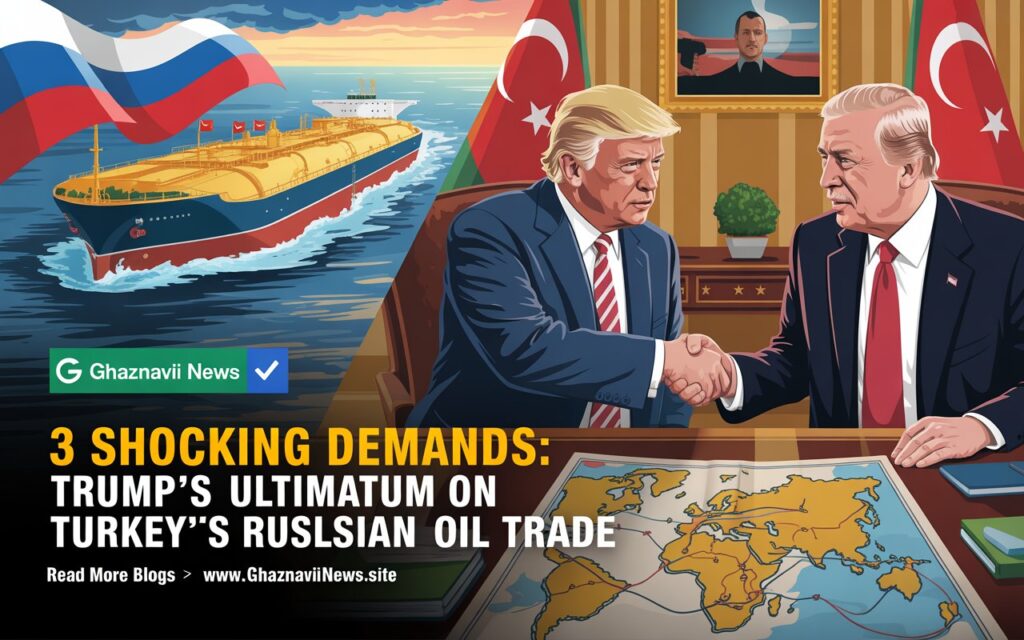
- The Two-Headed Beast: Turkey faces sanctions from two primary US laws. The first is the Countering America’s Adversaries Through Sanctions Act (CAATSA), imposed after Ankara purchased the Russian S-400 air defense system in 2020. The second is the National Defense Authorization Act (NDAA), which also includes punitive measures.
- The Key Difference – Presidential Power: This is where Trump’s power lies. The President has the authority to lift CAATSA sanctions by submitting a certification to Congress stating that the sanctioned entity is no longer engaging in significant transactions with Russia’s defense sector. The Russian oil trade, however, is being used as the primary bargaining chip for this action. Lifting the NDAA sanctions, which block the transfer of F-35 fighter jets, is considered “more difficult” as the law contains no presidential waiver. As one senior Western official stated, “Trump doesn’t like the NDAA language, but he can’t work around it.”
- The Stakes for Turkey’s Defense Industry: The CAATSA sanctions have frozen the assets of Turkey’s Presidency of Defense Industries (SSB) and imposed visa bans, effectively crippling broad defense cooperation. Turkish Foreign Minister Hakan Fidan noted in April that there are approximately $20 billion in spare parts that Turkish defense firms hope to buy from the US once the sanctions are lifted. Furthermore, Turkey’s request to buy about 100 F-16 engines for its fifth-generation fighter jet program is also blocked by Congress, with sources stating that “CAATSA is having a chilling effect on any military transaction.”
The explicit linkage of the Russian oil trade to sanctions relief represents a new and aggressive chapter in US foreign policy. For years, the S-400 purchase was the sole focus of the dispute. Now, the Trump administration is expanding the conditions for reconciliation to include Turkey’s broader economic relationship with Moscow, specifically targeting the lifeblood of the Russian economy: its oil exports. This strategic pivot indicates a desire to inflict maximum damage on the Russian oil trade by turning one of its key hubs into a dry port. The potential rewards for Turkey are immense—access to $20 billion in defense deals and the modernization of its air force. However, the cost is a fundamental reordering of its energy security. The Russian oil trade is not just a line item for Turkey; it is a source of affordable energy that fuels its economy. Abandoning it would force Ankara to find more expensive alternatives on the global market, potentially triggering domestic economic discontent. The Trump administration is betting that Turkey’s desire to escape the strategic paralysis caused by sanctions is greater than its commitment to its current role in the Russian oil trade. Diplomatic sources indicate that if Trump sees “solid progress” on this issue, he could lift the CAATSA sanctions within a few months, creating a very short and demanding timeline for Ankara.
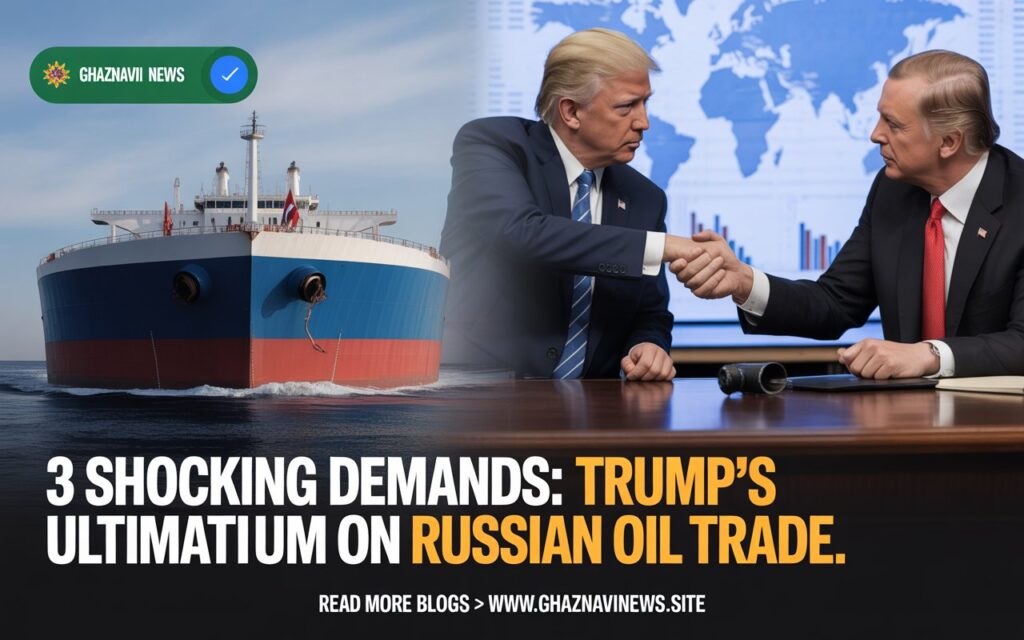
Demand 3: The Implicit Call for Geopolitical Realignment
Beyond the immediate demands on oil and sanctions lies a third, more profound expectation: a subtle but clear push for Turkey to recalibrate its geopolitical stance within the NATO alliance.
- A Test of Loyalty: By demanding a halt to the Russian oil trade, the US is effectively testing Turkey’s allegiance. While other NATO allies like Slovakia and Hungary also purchase Russian energy, Turkey’s volume and its status as a strategic, albeit difficult, partner make it a higher-profile target. Trump’s public lobbying at the UN General Assembly for NATO nations to stop buying Russian energy was a message aimed directly at Ankara.
- Walking a Fine Line: Turkey has walked a careful line since the Ukraine invasion, positioning itself as a mediator and maintaining ties with both Moscow and Kyiv. It has not joined Western sanctions but has pledged compliance with international law. The US demand to end the Russian oil trade forces Turkey to choose a side more definitively, potentially undermining its carefully crafted balancing act and its unique role as a diplomatic channel to the Kremlin.
- The Natural Gas Conundrum: A former US official highlighted the limits of this strategy, noting that if US demands were expanded to include natural gas, it would become “impossible” for Turkey. A full 25% of Turkey’s total energy comes from Russian gas, a vital source for electricity and households. This indicates that the US is, for now, strategically focusing on the Russian oil trade as the most feasible pressure point, acknowledging that a complete energy decoupling is currently beyond reach.
The High-Stakes Blame Game and Erdogan’s Domestic Challenge
For President Erdogan, this US ultimatum presents a severe domestic political challenge. He returned from Washington with over $60 billion in energy and aerospace memorandums of understanding, but faced immediate domestic criticism for securing no immediate, tangible results on the sanctions front.
- The “Why Now?” Question: Trump’s explicit connection of the Russian oil trade to sanctions provides Erdogan with a clear, if difficult, path forward. However, it also sets him up for potential failure. If he cannot or will not comply, he can be blamed for the continued economic damage caused by the sanctions.
- A Lose-Lose Scenario?: Complying with the US demand could lead to higher energy costs for Turkish citizens and businesses, fueling inflation and public discontent. Refusing, however, guarantees the continued strangulation of Turkey’s vital defense industry and blocks its strategic ambitions. Erdogan is trapped between an economic rock and a geopolitical hard place, with the future of the Russian oil trade at the center of the storm.
The coming months will be a critical test of wills. Will Turkey capitulate to US demands and fundamentally alter its role in the Russian oil trade? Or will it find a way to resist, forcing a prolonged stalemate that further fractures the NATO alliance? The answer will reshape the geopolitical and energy landscape of Eastern Europe and the Middle East for years to come.
Why is the US pressuring Turkey over Russian oil?
The US sees Turkey’s massive imports of Russian Urals crude as undermining Western efforts to economically isolate Russia over its war in Ukraine. By linking sanctions relief to halting this trade, the Trump administration aims to cut a major revenue stream for Moscow and force a NATO ally to align more closely with Western energy policy.
What sanctions is Turkey currently facing from the US?
Turkey faces sanctions under two main US laws: CAATSA (for purchasing Russian S-400 systems) and the NDAA. These sanctions block arms sales like F-35 jets, freeze assets of its defense procurement agency, and impose visa bans, crippling its defense industry cooperation with the West.
Can President Trump lift these sanctions on his own?
He can lift CAATSA sanctions by certifying to Congress that Turkey is no longer engaging in significant defense transactions with Russia. However, the NDAA sanctions on F-35 transfers are harder to remove as the law provides no presidential waiver, requiring Congressional action.
How reliant is Turkey on Russian energy?
Turkey is heavily reliant. It is the second-largest maritime importer of Russian crude oil after India. Furthermore, Russian natural gas supplies 25% of Turkey’s total energy needs, making a complete and immediate break from Russian energy virtually impossible without severe economic disruption.
Table of Contents
- US Forces Conduct Rare Raid on Cargo Ship Carrying Military Materials from China to Iran
- Trump Administration Launches Historic Pax Silica Alliance to Challenge China’s Rare Earth and Technology Dominance
- South East England Receives £133 Million Boost for Cycling, Walking and Wheeling Infrastructure
- The Hidden Billionaire Village: Inside Cashiers North Carolina’s Wealthy Enclave
- Medway Maritime Hospital A&E Safety Concerns: CQC Report Reveals Mixed Results
Read More News