
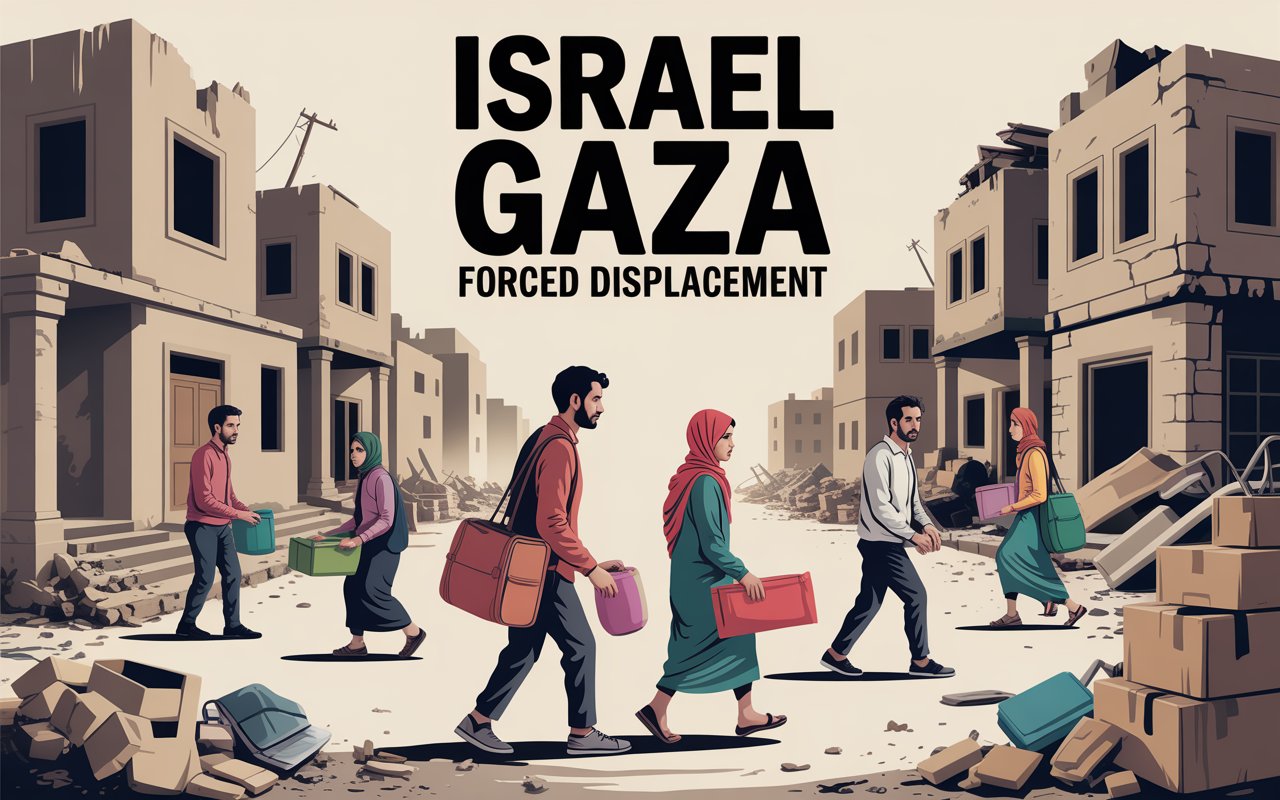
Gaza Under Relentless Israeli Bombardment: Thousands Displaced, UN Warns of Genocide

The ongoing conflict between Israel and Gaza has escalated into one of the most devastating humanitarian crises of modern times. In recent days, Israel’s intensified bombardment of Gaza City has resulted in the forced displacement of thousands of Palestinians, the destruction of residential buildings, and the deaths of dozens of civilians.
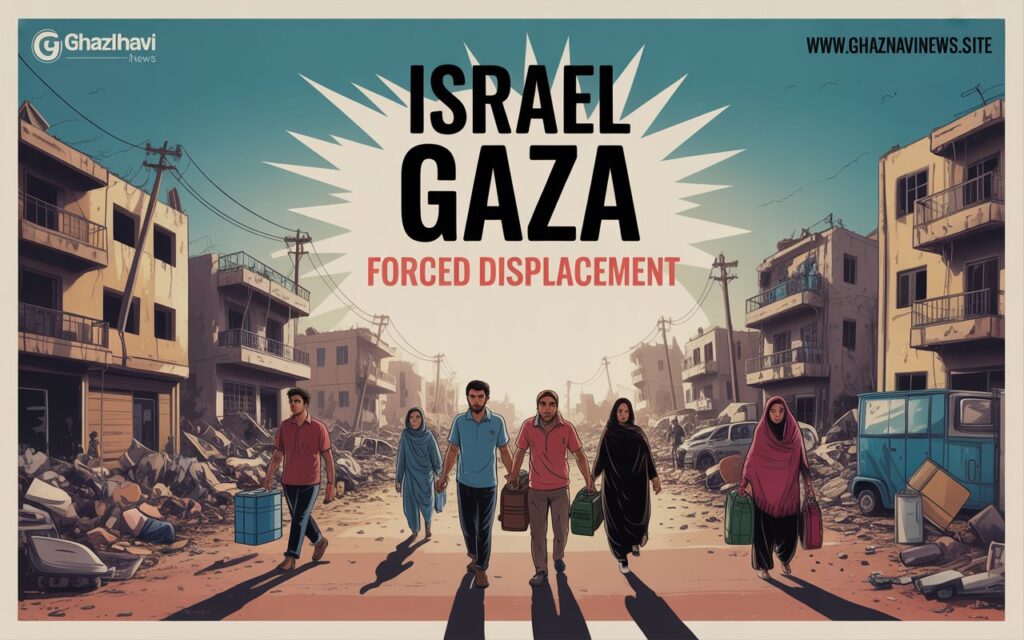
According to health officials, more than 91 Palestinians were killed in a single day of heavy Israeli airstrikes. As the bombardment continued, thousands were seen fleeing with whatever possessions they could carry, uncertain if they would ever return to their homes. The Israel Gaza forced displacement crisis is now at a critical level, drawing global condemnation and raising urgent calls for immediate ceasefire and humanitarian aid.
Escalation of Israeli Strikes
On Tuesday, Israeli forces launched one of the heaviest attacks on Gaza City since the beginning of the war. The offensive targeted both residential and religious sites, including the Aebki Mosque in Tuffah neighborhood, leaving widespread destruction.
Witnesses described the city as “burning,” with black smoke rising above destroyed neighborhoods. Civilians loaded furniture and belongings onto donkey carts and vans, fleeing south along al-Rashid Street — although even the so-called “safe zones” in southern Gaza have been subject to continuous airstrikes.
The Israeli military confirmed that tanks and armored vehicles were advancing into Gaza, with officials stating it could take “several months” to gain full control over Gaza City. This prolonged military campaign has deepened fears that forced displacement of Palestinians is not temporary, but part of a long-term strategy.
Humanitarian Toll: Thousands Fleeing
According to Gaza’s government media office, more than 350,000 residents have been displaced from central and western Gaza City, with 190,000 leaving entirely. Yet, some 15,000 people have been forced to return due to overcrowding and unsafe conditions in southern camps like Al-Mawasi, which itself has come under Israeli fire.
For those fleeing, the journey is perilous. Vehicles carrying families were struck by Israeli bombs along coastal routes. Residential high-rises, schools, and hospitals have been reduced to rubble, leaving civilians with nowhere safe to seek shelter.
The UN Secretary-General António Guterres condemned the attacks as “morally, politically, and legally unacceptable,” calling Gaza a “humanitarian inferno.”
UN Report Labels the War as Genocide
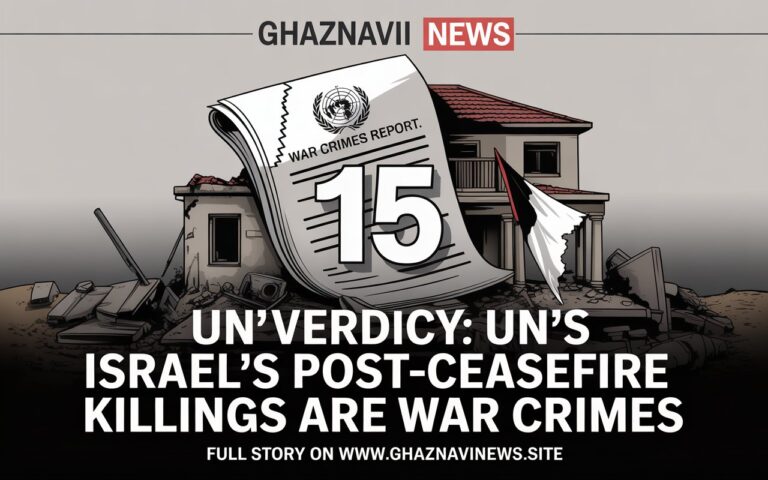
In a landmark statement, the UN Commission of Inquiry concluded that Israel’s war in Gaza amounts to genocide. The report highlights explicit statements from Israeli officials that reveal an intent to destroy Palestinians “as a people.”
The commission’s findings come after nearly two years of war that have left over 64,000 Palestinians dead, thousands injured, and millions displaced. The Palestinian Ministry of Foreign Affairs welcomed the UN report, stating that the international community must act immediately to stop what it described as “a deliberate policy of annihilation.”
Global Reactions
International criticism of Israel’s military campaign is intensifying:
- France’s Foreign Ministry urged Israel to halt its “devastating campaign” and resume peace talks.
- Ireland’s President Michael D. Higgins condemned both those committing genocide and the nations supplying weapons, calling for a suspension of trade with Israel.
- Human rights organizations worldwide are warning that the forced displacement could become permanent if immediate intervention is not taken.
Forced Displacement: A Repeated History
The current crisis echoes the Nakba of 1948, when more than 700,000 Palestinians were displaced during the creation of Israel. For many Palestinians, today’s exodus from Gaza is a painful reminder of historical displacement, reinforcing fears that they may never return to their homes.
International law, particularly the Geneva Conventions, prohibits the forced displacement of civilians during conflict. Yet, the scale of destruction in Gaza suggests deliberate targeting of civilian infrastructure, raising serious legal and ethical questions about Israel’s conduct.
Humanitarian Catastrophe and Aid Challenges
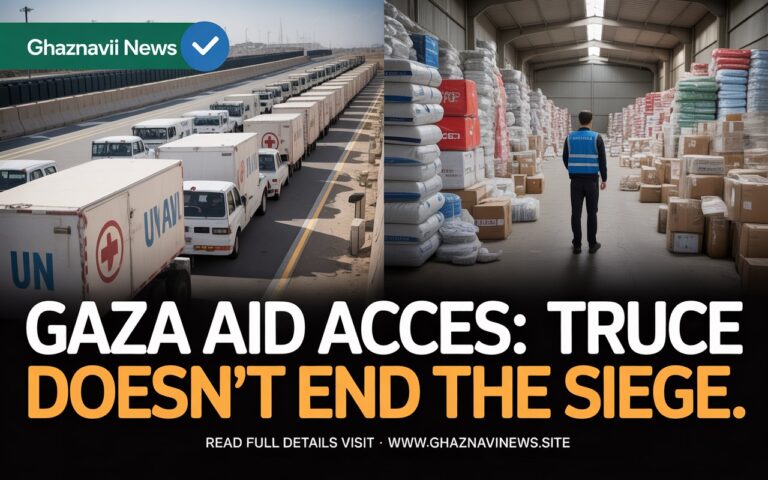
Relief organizations face enormous challenges delivering aid. With roads destroyed and border crossings restricted, trucks carrying food, medicine, and fuel are unable to meet the needs of over 2 million trapped civilians.
The World Health Organization (WHO) warned that Gaza’s hospitals are on the verge of collapse, operating without electricity, clean water, or medical supplies. Meanwhile, the UN estimates that at least 80% of Gaza’s population is now displaced, making it one of the largest humanitarian crises of the century.
Calls for Accountability
The growing consensus among international observers is that the Israel Gaza forced displacement crisis cannot be ignored. Legal experts have urged the International Criminal Court (ICC) to launch immediate investigations into war crimes and crimes against humanity.
Civil society movements across the globe are demanding sanctions, arms embargoes, and political isolation of Israel until it halts its military campaign and complies with international law.
Conclusion
The Israel Gaza forced displacement crisis is a defining humanitarian and political challenge of our time. With thousands killed, cities reduced to rubble, and generations of Palestinians uprooted, the conflict has reached an unsustainable point.
Unless swift international action is taken — not just condemnations but concrete steps such as sanctions, diplomatic isolation, and humanitarian aid — Gaza risks complete devastation. The world faces a moral test: whether to uphold the principles of human rights and justice, or to allow the systematic erasure of an entire people.
What does Israel Gaza forced displacement mean?
It refers to the mass exodus of Palestinians from their homes in Gaza due to relentless Israeli bombardment, making it unsafe to remain.
How many Palestinians have been displaced so far?
According to Gaza’s media office, over 350,000 people have been displaced from Gaza City alone, with nearly 2 million across the strip facing forced displacement.
Why is the UN calling it genocide?
The UN report cites explicit intent by Israeli officials and large-scale targeting of civilians, which meets the definition of genocide under international law.
What is the international community doing about it?
Countries like France, Ireland, and human rights groups are demanding sanctions and ceasefire, but global action remains limited and fragmented.
Is forced displacement legal during war?
No. International humanitarian law strictly prohibits the forced displacement of civilians except for temporary safety evacuations. The current scale of displacement in Gaza is considered unlawful.
Advertisement

Table of Contents
Read More News








[…] More News of GAZA CITY Israel Gaza forced […]